 Get in touch
 English
 Deutsch
 中文简体
中文简体 Español

1. Introduction: Deconstructing AC Induction Motor Horsepower The AC Induction Motor is one of the m...
READ MOREIndustry News
2026-09-03
Content
An R&D engineer once told us that a brushless motor which performed beautifully on a drone test bench stalled within minutes on a robot arm. The cause was not a lack of power. It was a mismatch between the continuous torque specification used by the drone builder and the low-speed, high-holding-torque profile demanded by a robot joint. A brushless motor for robotics must hold position against gravity, move smoothly at 20 RPM, and survive frequent start-stop cycles without thermal damage. That is a completely different specification landscape.
Procurement engineers often make the same mistake: they pick a motor based on the highest no-load RPM in a catalog, then discover the continuous torque at the actual joint speed falls short. The result is a redesign that costs months.
A brushless motor for robotics is a three-phase synchronous machine engineered for high torque density, low cogging torque, and closed-loop position feedback rather than for peak no-load RPM.
The difference becomes obvious when you compare a propulsion drone motor with a joint actuator. A drone motor is selected for thrust-to-weight at high RPM. A robot joint motor is selected for continuous torque at low speed, often with a harmonic gearbox reducing the output speed to 20-60 RPM while multiplying torque. The critical parameters are torque density (Nm per kilogram of motor mass), cogging torque (magnetic detent that causes uneven rotation), and winding flexibility.
Windings and encoders are also decided at the application level. A motor that works for a 24 VDC wrist axis may need a 310 VDC winding for a heavy waist axis, and the encoder type must match the controller input. These are not catalog choices; they are engineering choices.
For robot joints, the derating factor between peak and continuous torque is typically 2.5x to 3x. Always specify the continuous figure, not the peak figure.
Continuous torque at low RPM determines whether a robot can hold a payload; the maximum speed on the datasheet does not.
Gravity always acts on the motor, even when the arm is stationary. A wrist axis that carries a 2 kg tool needs roughly 0.5 to 1.5 Nm of continuous torque at 50-100 RPM to hold that tool steady. An elbow axis needs 3-8 Nm. A shoulder axis handling a full payload may need 15-40 Nm. The no-load speed of 6000 RPM is irrelevant here because the joint never operates near that speed.
Use a 3x safety margin when sizing a joint motor. A motor that delivers only the exact required torque will overheat within the first month of operation.
| Robot joint type | Required continuous torque at output | Typical BLDC frame |
| Wrist axis | 0.5-1.5 Nm | 42 mm |
| Elbow axis | 3-8 Nm | 57-76 mm |
| Shoulder axis | 15-40 Nm | 80-100 mm |
Joint architecture should determine the motor frame and gearbox, not the other way around.
High-load shoulder joints benefit from harmonic gear motors, which offer zero backlash and high energy density. Jiangsu Retek Motion Co., Ltd. (Retek Motion) offers a 200 Nm harmonic gear motor that fits heavy shoulder and waist axes. Medium payloads on collaborative arms and mobile manipulators work well with 60 Nm gear motors. For compact, shoulder-mounted medical robotics, a 42 mm outrunner brushless motor with gearhead provides power density in a small envelope.
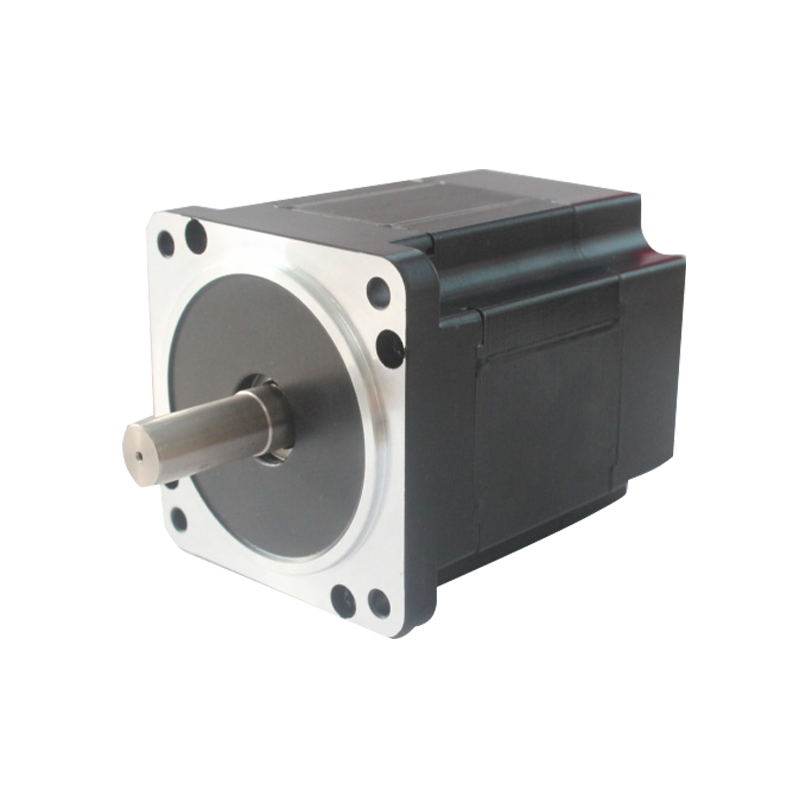
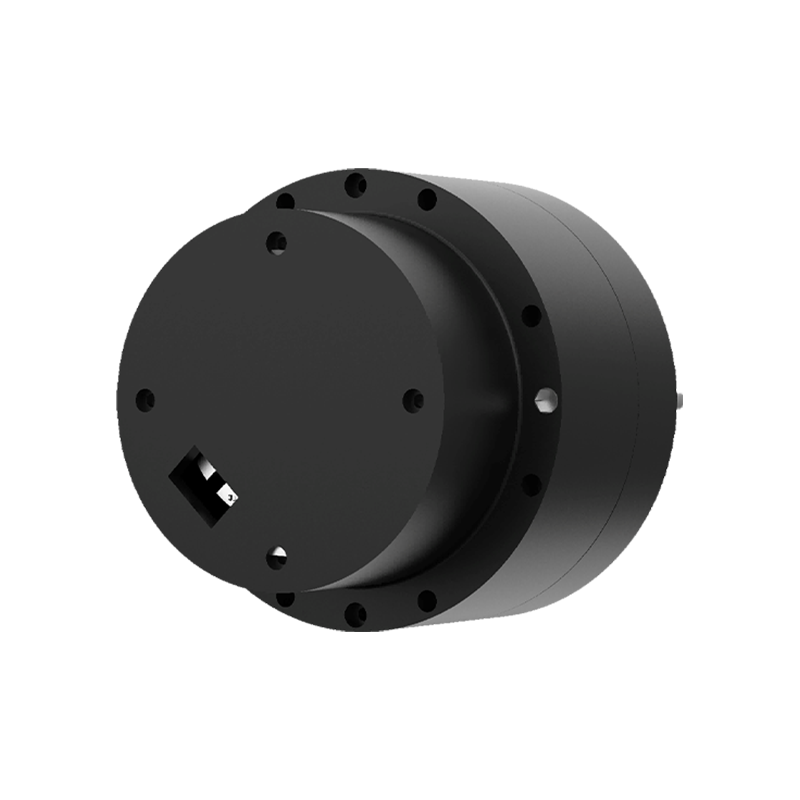 200 Nm Harmonic Gear Motor for Heavy-Duty Robot JointsThis motor delivers 200 Nm torque with zero backlash, making it suitable for heavy shoulder and waist axes in robots requiring precise and repeatable positioning.View Product →
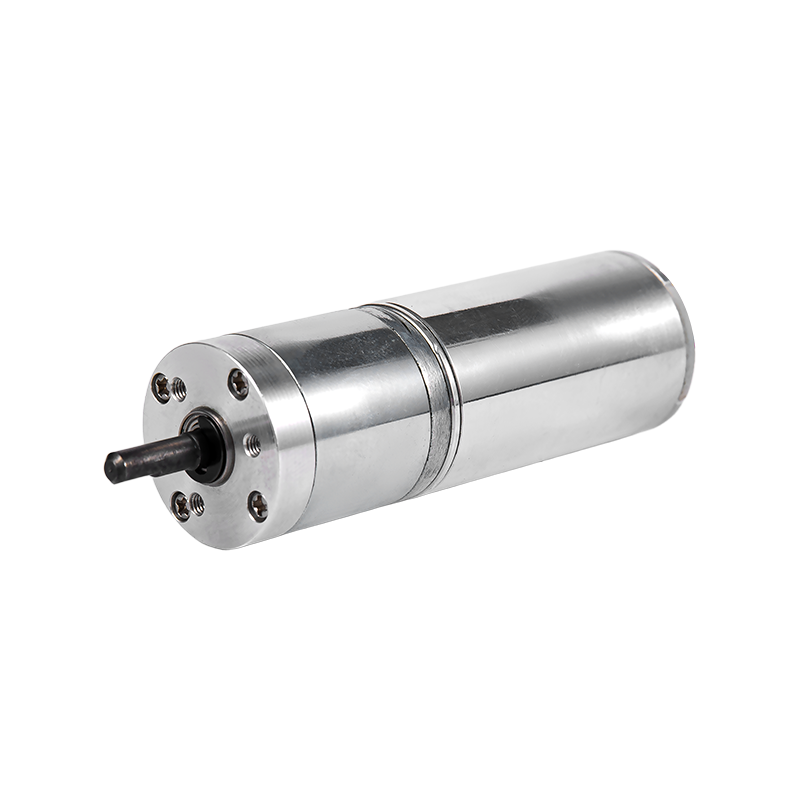
 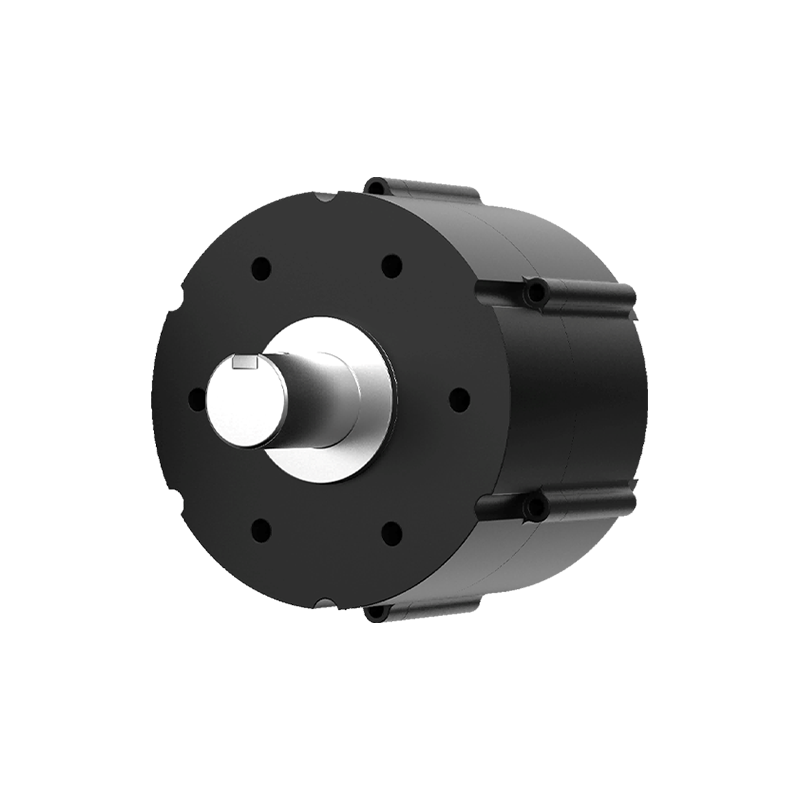 60 Nm Gear Motor for Collaborative Robots and ManipulatorsWith a 60 Nm rated torque, this gear motor fits medium payload collaborative arms and mobile manipulators, providing reliable performance for various robotic tasks.View Product →
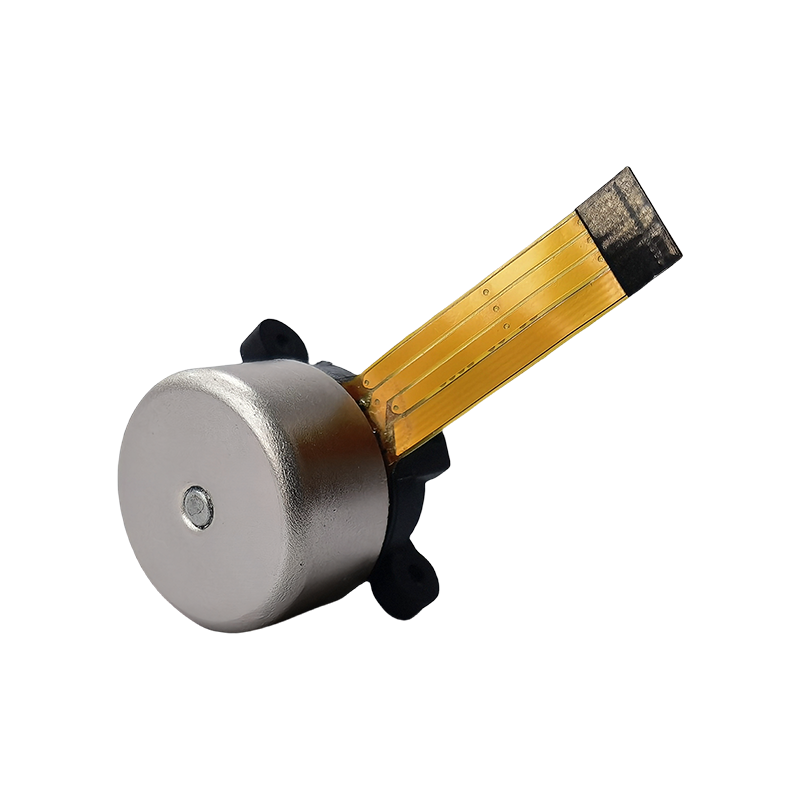
 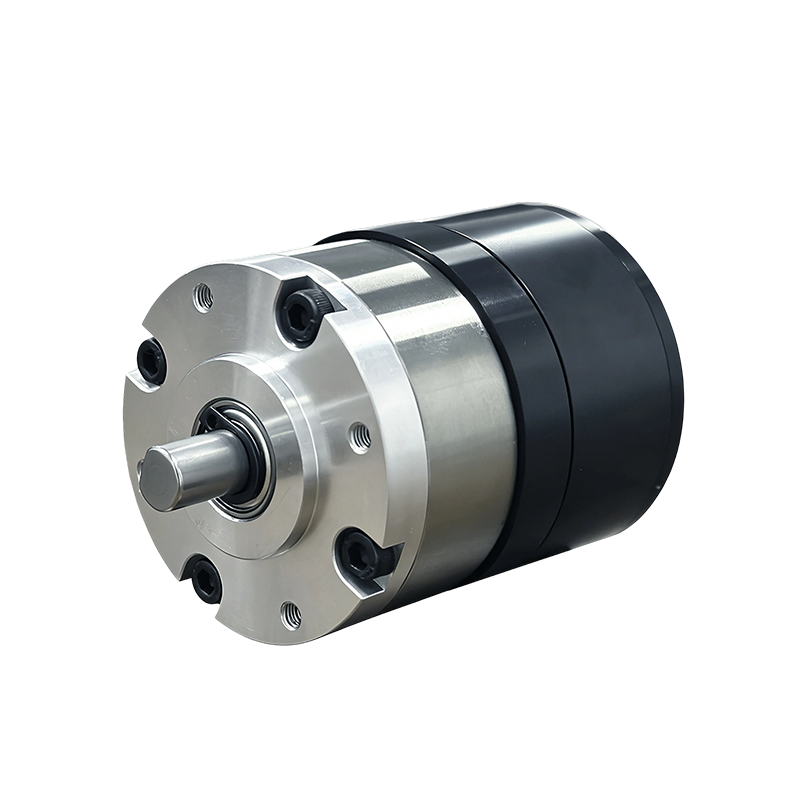 42mm Outrunner Brushless Motor with Gearhead for Medical RoboticsThis compact 42mm outrunner brushless motor with gearhead offers high torque and precise control, ideal for shoulder-mounted medical robotics applications.View Product →
Harmonic gearboxes offer zero backlash, which is necessary for repeatable positioning. Planetary gearboxes are less expensive and tolerate impact loads better, so they suit mobile robot wheels that hit curbs and ramps. The motor frame follows the gearbox choice, not the other way around.
Use this checklist when evaluating any candidate motor for a robot joint:
A larger frame does not always produce proportionally more usable torque, because winding fill factor and heat dissipation change with diameter and axial length.
Retek Motion's brushless DC line spans from 28 mm to 130 mm. Representative continuous torque values in the 24 VDC series are roughly 0.4 Nm for a 42 mm motor, 0.8 Nm for 57 mm, 1.6 Nm for 76 mm, 2.2 Nm for 80 mm, 3.5 Nm for 100 mm, and 6.5 Nm for 130 mm. The progression is closer to a cubic relationship with rotor diameter, which is why frame size selection is primarily a thermal design problem.
At the shoulder axis, a 100 mm BLDC plus a 200 Nm harmonic gearbox covers most industrial payloads. Below that, 80 mm and smaller frames handle wrist and tool-center-point motions.
Engineering flexibility and vertical manufacturing integration matter more than catalog breadth, because most robot joints require a custom motor project.
Retek Motion has designed and built brushless DC motors in-house since 2018. The company also produces CNC-machined gearbox housings, die-cast components, and cable harnesses under one roof. That combination lets a robot manufacturer iterate on winding, encoder, and connector configurations without coordinating multiple suppliers.
For specific use cases, Retek's low-cogging brushless motors reduce position ripple at the output, while high-torque brushless DC motors provide the margin needed when payloads are dynamic.
A robot motor is a system-on-a-shaft: windings, encoder, brake, gearbox, and harness must all align to one torque-speed profile.
Start your motor specification with the continuous torque at the joint speed, not the no-load speed from the datasheet.
A robotics brushless motor is specified for continuous torque at low speed, low cogging, and feedback compatibility, while a regular BLDC motor is usually rated for peak speed and high output power.
Multiply the payload mass by the length of the moment arm, add the reflected inertia and gearbox losses, then apply a safety factor of at least 3x.
Harmonic gearboxes provide zero backlash and high reduction for precise arm joints; planetary gearboxes handle shock loads better for mobile drive wheels.
Yes. Integrated controller and custom winding options are standard, and a vertically integrated supplier can also produce the gearbox housing and cable harness.
1. Introduction: Deconstructing AC Induction Motor Horsepower The AC Induction Motor is one of the m...
READ MORE1. Introduction In modern industrial automation, data center construction, consumer electronics upgr...
READ MOREStepper motors represent a cornerstone of modern motion control, offering precise positioning and re...
READ MOREThe industrial motor landscape is undergoing a significant transformation, driven by the relentless ...
READ MORERelated Products
Building 10, No.199, Jinfeng Road, Suzhou High-tech, Jiangsu Province, China
+86-133 3869 4967
+86-512 6876 9967
sean@retekmotion.com
rsgrivic@126.com
 WhatsApp
Copyright © Jiangsu Retek Motion Co., Ltd. All Rights Reserved. Custom OEM Industrial Multi Rotor Drone Motors Manufacturers