 Get in touch
 English
 Deutsch
 中文简体
中文简体 Español

1. Introduction: Deconstructing AC Induction Motor Horsepower The AC Induction Motor is one of the m...
READ MOREIndustry News
2026-05-08
Content
A motor is a device that converts one form of energy into mechanical motion — specifically rotational or linear movement. In the broadest sense the term covers combustion engines, hydraulic motors, and pneumatic actuators, but in modern engineering and everyday usage "motor" almost always refers to an electric motor: a machine that converts electrical energy into mechanical work through the interaction of magnetic fields.
Electric motors are the dominant mechanical prime mover in the world. They drive pumps, compressors, fans, conveyor belts, machine tools, electric vehicles, household appliances, and virtually every piece of automated industrial equipment. It is estimated that electric motors account for approximately 45–50% of all global electricity consumption — a figure that reflects how completely motors underpin modern industrial and domestic life. Understanding what a motor is and how it works is foundational knowledge for anyone working in engineering, manufacturing, or building services.
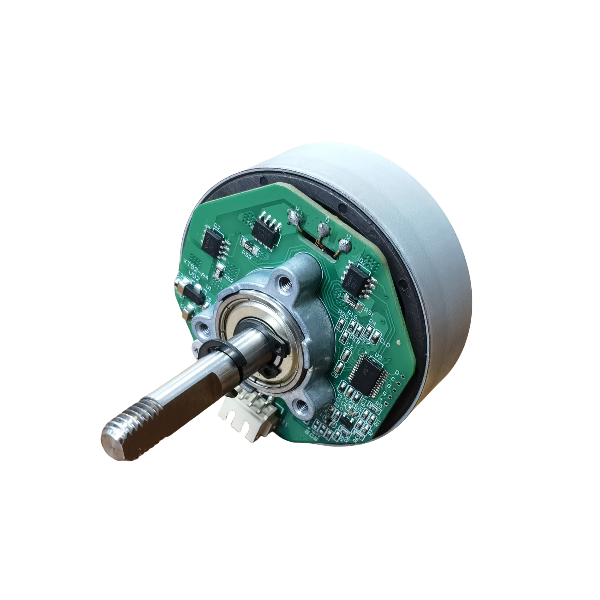
All electric motors — regardless of type, size, or power rating — operate on a single underlying physical principle: a conductor carrying an electric current placed within a magnetic field experiences a mechanical force. This is described by the Lorentz force law, which states that the force on a current-carrying conductor is proportional to the current magnitude, the magnetic field strength, and the length of conductor within the field.
In a practical motor, this principle is applied continuously and in a controlled geometry to produce sustained rotation. Conductors are arranged in a coil on a rotating component (the rotor), surrounded by a magnetic field produced either by permanent magnets or by electromagnets in the stationary component (the stator). When current flows through the rotor conductors, the Lorentz force pushes them tangentially — that is, at a right angle to both the current direction and the magnetic field direction — producing torque around the motor's rotational axis.
The challenge in motor design is sustaining this torque continuously as the rotor turns. If the current direction in the conductors remained fixed while the rotor rotated, the force direction would reverse after half a revolution and the rotor would decelerate back to its starting position. All motor designs solve this problem differently — and those different solutions define the distinct motor types used across industry.
Despite the wide variety of motor designs, virtually all electric motors share the same fundamental structural components:
| Motor Type | Supply | Commutation Method | Typical Application |
|---|---|---|---|
| DC brushed motor | DC | Mechanical commutator | Automotive, tools, small appliances |
| DC brushless motor (BLDC) | DC (via controller) | Electronic (ESC/inverter) | EVs, drones, HVAC, robotics |
| AC induction motor | AC | None (induced rotor current) | Industrial pumps, fans, compressors |
| AC synchronous motor | AC | Rotor locks to supply frequency | Precision drives, clocks, servo |
| Stepper motor | DC (pulsed) | Electronic step sequencing | CNC, 3D printers, positioning |
When specifying or evaluating a motor, the following parameters define its performance envelope:
1. Introduction: Deconstructing AC Induction Motor Horsepower The AC Induction Motor is one of the m...
READ MORE1. Introduction In modern industrial automation, data center construction, consumer electronics upgr...
READ MOREStepper motors represent a cornerstone of modern motion control, offering precise positioning and re...
READ MOREThe industrial motor landscape is undergoing a significant transformation, driven by the relentless ...
READ MORERelated Products
Building 10, No.199, Jinfeng Road, Suzhou High-tech, Jiangsu Province, China
+86-133 3869 4967
+86-512 6876 9967
sean@retekmotion.com
rsgrivic@126.com
 WhatsApp
Copyright © Jiangsu Retek Motion Co., Ltd. All Rights Reserved. Custom OEM Industrial Multi Rotor Drone Motors Manufacturers