 Get in touch
 English
 Deutsch
 中文简体
中文简体 Español

1. Introduction: Deconstructing AC Induction Motor Horsepower The AC Induction Motor is one of the m...
READ MOREIndustry News
2026-01-26
Content
In the world of precision motion control, few components are as crucial and versatile as the worm gear motor. This compact powerhouse combines an electric motor with a worm gear reduction unit, offering unique benefits for a wide array of industrial and commercial applications. Unlike standard catalog parts that offer a one-size-fits-all approach, truly effective motion solutions often require customization to meet exact performance, space, and durability demands. This guide delves deep into the mechanics, advantages, selection criteria, and the transformative power of custom-engineered worm gear systems.
A worm gear motor is an integrated system where a worm (a screw-like gear) meshes with a worm wheel (a gear resembling a spur gear). This configuration provides a high reduction ratio in a single compact stage, making it exceptionally space-efficient.
The operation is elegantly simple yet mechanically profound.
The popularity of worm gear reducers stems from their distinct set of mechanical advantages, which make them ideal for specific scenarios. When comparing worm gears to other gear types like helical or planetary, several key differences emerge.
For instance, worm gearboxes typically offer higher reduction ratios in a single stage compared to helical gears. Their self-locking feature is not commonly found in standard helical or planetary systems. Furthermore, while planetary gearboxes are excellent for high torque and precision, they are often more complex and costly than a comparable worm gear setup for moderate-duty applications[1].
| Feature | Worm Gear Motor | Helical Gear Motor | Planetary Gear Motor |
|---|---|---|---|
| Reduction Ratio (Single Stage) | High (5:1 to 100:1+) | Moderate (3:1 to 10:1) | High (3:1 to 10:1 per stage) |
| Back-Driving | Generally Not Possible (Self-Locking) | Possible | Possible |
| Efficiency | Lower (70%-90%) | Higher (94%-98%) | High (95%-97%) |
| Noise Level | Quiet | Moderate | Low to Moderate |
| Compactness | High (for high ratio) | Moderate | High (torque density) |
These motors are ubiquitous. They are found in:
Choosing the correct motor is critical for performance and longevity. This process moves beyond catalog numbers to focus on specific application parameters.
While off-the-shelf motors serve many purposes, demanding applications often reveal limitations in standard designs. This is where the philosophy of tailored engineering becomes paramount.
Catalog motors are built to general specifications, which can lead to compromises in:
Unlike other motor suppliers, Retek engineering system prevents the selling of our motors and components by catalogue as every model is customized for our customers. The customers are assured that every component they receive from Retek is designed with their exact specifications in mind. Our total solutions are a combination of our innovation and a close working partnership with our customers and suppliers[2]. This approach directly addresses common pain points.
Retek's unique business model, encompassing Motors, Die-Casting and CNC manufacturing, and Wire Harness production, allows for unparalleled control over quality and customization.
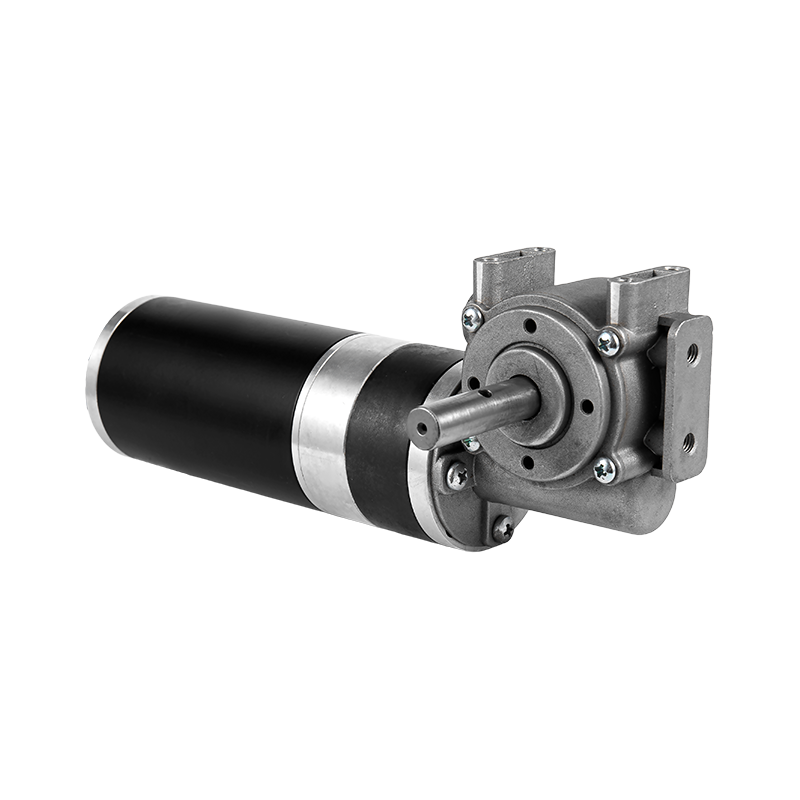
The worm gear motor remains a cornerstone of efficient, compact, and reliable motion control. Understanding its principles, advantages, and selection criteria is the first step. The critical second step is recognizing when a standard catalog unit falls short and a custom-engineered solution is needed. By partnering with an engineering-focused manufacturer like Retek, designers and engineers gain access to total solutions where every parameter—from torque and noise level to environmental sealing and physical dimensions—is optimized for their specific challenge. This collaborative, custom approach ensures superior performance, longevity, and value, turning mechanical components into true competitive advantages.
Welcome to send us an RFQ, it is believed you will get the best cost-effective products and services here!
The primary advantages are its ability to provide high reduction ratios in a single, compact stage and its inherent self-locking characteristic, which prevents back-driving and acts as a built-in brake. This makes it ideal for applications like lifts, conveyors, and adjustable mechanisms where holding a position is critical.
Yes, but selection is crucial. A continuous duty worm gear motor is specifically designed with thermal management (e.g., larger housings, efficient gearing, heat-dissipating fins) to handle constant operation without overheating. Using a standard intermittent-duty motor for continuous operation can lead to rapid lubricant breakdown and failure.
To achieve a low noise worm gear motor, focus on precision manufacturing of gear teeth, using high-quality lubricants designed for acoustic damping, ensuring perfect alignment, and opting for materials like polymer composites for the worm wheel. For extreme quietness, a custom-engineered solution that addresses all these factors holistically is often required.
A washdown duty worm gearbox features sealed bearing isolators, high-grade shaft seals (often multiple), a corrosion-resistant housing (stainless steel or coated), and specially formulated lubricants. It will have a high IP rating (e.g., IP65, IP67) indicating protection against dust and water jets or immersion.
Consider a custom compact right angle gearmotor when space is extremely limited, when you need a specific mounting configuration not offered commercially, or when the standard unit's torque/speed profile doesn't match your application needs. Customization allows optimization of the housing shape, shaft location, and gear ratio to fit your exact mechanical and spatial requirements.
[1] Dudley, D.W., "Handbook of Practical Gear Design," CRC Press. This source provides foundational comparisons of gear types, including efficiency and ratio capabilities of worm versus planetary and helical systems.
[2] Retek Engineering Systems, "Custom Motor Design Specifications," Internal Technical Documentation. This refers to the company's proprietary methodologies for designing tailored worm gear solutions for specific environmental and performance challenges.
1. Introduction: Deconstructing AC Induction Motor Horsepower The AC Induction Motor is one of the m...
READ MORE1. Introduction In modern industrial automation, data center construction, consumer electronics upgr...
READ MOREStepper motors represent a cornerstone of modern motion control, offering precise positioning and re...
READ MOREThe industrial motor landscape is undergoing a significant transformation, driven by the relentless ...
READ MORERelated Products
Building 10, No.199, Jinfeng Road, Suzhou High-tech, Jiangsu Province, China
+86-133 3869 4967
+86-512 6876 9967
sean@retekmotion.com
rsgrivic@126.com
 WhatsApp
Copyright © Jiangsu Retek Motion Co., Ltd. All Rights Reserved. Custom OEM Industrial Multi Rotor Drone Motors Manufacturers