 Get in touch
 English
 Deutsch
 中文简体
中文简体 Español

1. Introduction: Deconstructing AC Induction Motor Horsepower The AC Induction Motor is one of the m...
READ MOREIndustry News
2026-02-04
Content
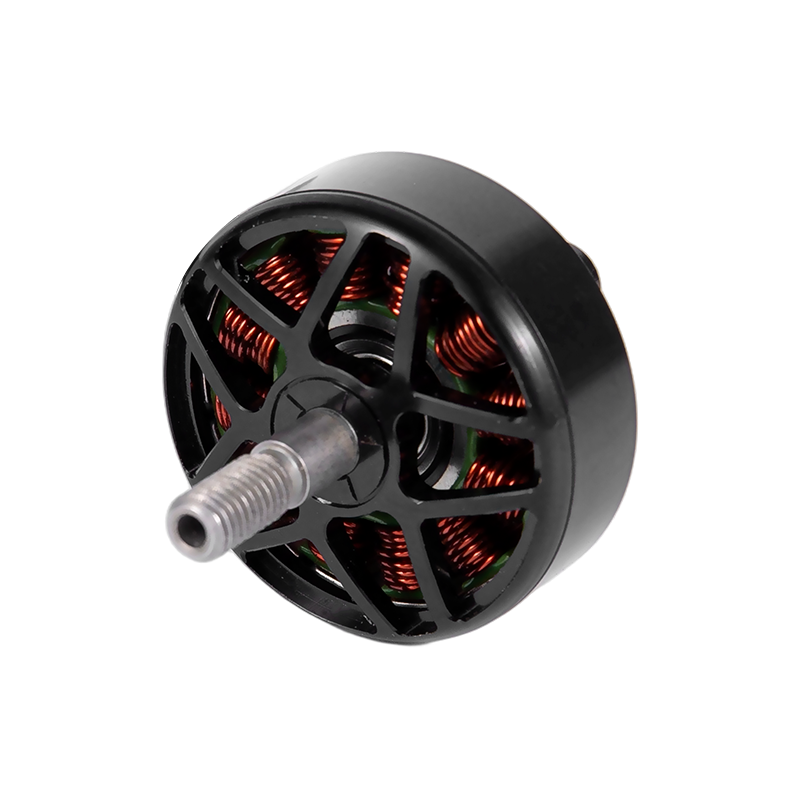
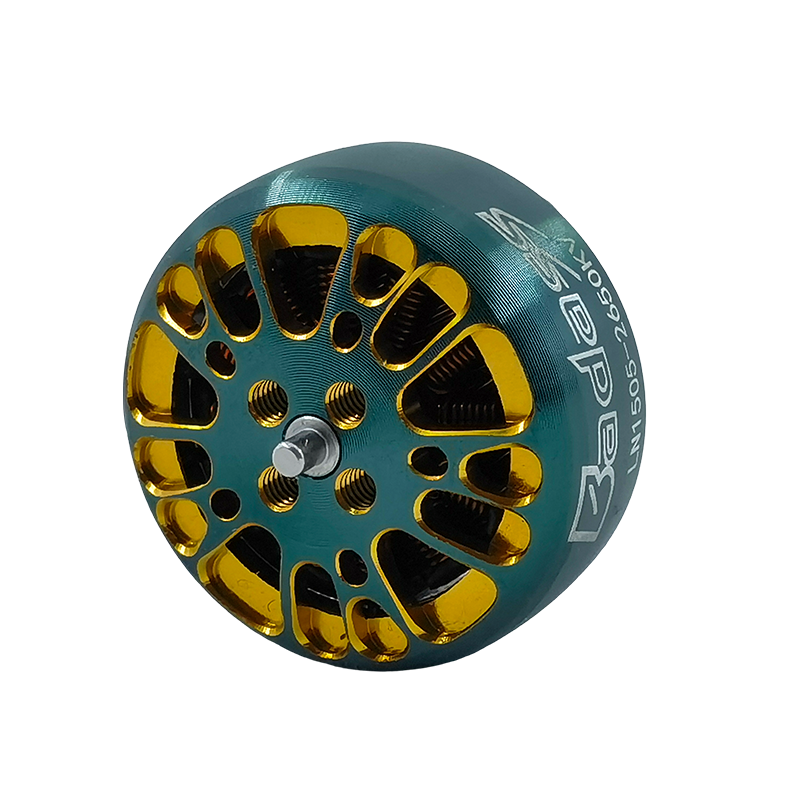
The heart of any high-performance drone is its propulsion system, and at the core of that system lies the drone brushless motor. Unlike their brushed counterparts, brushless motors offer superior efficiency, power, and longevity, making them the unequivocal standard for modern UAVs. This guide delves deep into the technology, selection criteria, and the significant advantages of opting for customized motor solutions to perfectly match your specific aerial application.
Brushless motors operate on a fundamental principle of electromagnetism, where permanent magnets on the rotor are driven by a rotating magnetic field generated by the stator windings. The absence of physical brushes eliminates friction, reduces wear, and dramatically improves performance.
Selecting the correct motor is a balancing act between thrust, weight, efficiency, and voltage. An undersized motor will struggle, while an oversized one will waste energy and reduce flight time.
Understanding motor labels is the first step to making an informed choice. A motor labeled "2306 1950KV" provides key physical and electrical information.
| Specification | What It Means | Impact on Performance |
| Stator Size (e.g., 2306) | First two digits: stator diameter (23mm). Last two digits: stator height (6mm). | Larger dimensions generally mean more torque and power handling. |
| KV Rating (e.g., 1950KV) | Revolutions per minute (RPM) the motor will turn per volt applied, with no load. | Lower KV: higher torque, suited for larger props. Higher KV: higher RPM, suited for smaller props. |
| Voltage (S Rating) | The number of Lithium-Polymer (LiPo) battery cells in series (e.g., 3S, 4S, 6S). | Higher voltage allows the same power at lower current, improving efficiency but requiring compatible components. |
The ideal motor-propeller combination is the cornerstone of drone performance. For instance, a heavy-lift cinematography drone requires a completely different setup than a lightweight racing drone. A common challenge is finding the perfect balance for long flight time drone motors, which prioritize efficiency over absolute peak thrust. This often involves selecting a lower KV motor swinging a larger-diameter, high-pitch propeller at a moderate RPM. In contrast, achieving the explosive power needed for high thrust brushless motors for drones typically involves a higher KV motor paired with a prop that can convert high RPM into direct vertical thrust, albeit at the cost of higher current draw.
| Drone Application | Recommended Motor Type | Typical Propeller Match | Priority |
| Aerial Photography / Cinematography | Low to Mid KV, Larger Stator | Large Diameter, Low Pitch | Smoothness, Efficiency, Low Noise |
| FPV Racing | High KV, Medium Stator | Small Diameter, High Pitch | Instant Throttle Response, High Top Speed |
| Long-Endurance Mapping/Surveillance | Very Low KV, Large Stator | Large Diameter, Moderate Pitch | Maximum Efficiency, Thermal Management |
| Heavy-Lift / Industrial | Low KV, Very Large Stator | Very Large Diameter, Custom Pitch | Maximum Torque, Reliability, Cool Operation |
Beyond basic specifications, several advanced factors dictate real-world performance and reliability. Furthermore, for specialized applications, off-the-shelf motors often fall short, making a tailored approach necessary.
While catalogue motors serve general purposes, cutting-edge and mission-critical drone projects demand precision engineering. Unlike other motor suppliers, Retek engineering system prevents the selling of our motors and components by catalogue as every model is customized for our customers. The customers are assured that every component they receive from Retek is designed with their exact specifications in mind.
Retek products are widely supplied for residential fans, vents, boats, airplanes, medical facilities, laboratory facilities, trucks and other automotive machines. This diverse industrial experience translates directly into robust, reliable solutions for the drone sector, where demands for precision, durability, and performance are equally high. Welcome to send us an RFQ, it is believed you will get the best cost-effective products and services here!
Brushless motors are significantly more efficient, powerful, and durable because they eliminate the physical brushes that cause friction, electrical noise, and wear in brushed motors. This leads to longer flight times, better performance, and reduced maintenance.
KV determines motor speed. A lower KV motor provides more torque and is better for larger propellers and heavy-lift applications. A higher KV motor spins faster and is better for smaller propellers on lightweight, high-speed drones like racers.
No, compatibility is crucial. The ESC must be rated for the motor's current draw and support the correct battery voltage (S count). An undersized ESC will overheat and fail. Always check the maximum continuous current ratings of both components.
Standard motors are a compromise. If your project has unique requirements—such as specific size/weight constraints, extreme operational environments (heat, moisture, vibration), or need for optimized efficiency or noise levels—a custom motor from a partner like Retek ensures every specification is met for peak performance and reliability.
Provide as much detail as possible: target thrust, operating voltage, physical size constraints, preferred KV, propeller size, drone weight, mission profile (e.g., max flight time, aggressive maneuvering), and any environmental challenges (temperature, moisture). This allows engineers to propose the most effective solution.
[1] Johnson, M., & Chen, L. "Environmental Resilience in Electric Motor Design for Unmanned Aerial Systems." *Journal of Aerospace Engineering and Technology*, vol. 15, no. 3, 2023, pp. 45-59. (This source discusses protective treatments and material selections for motors operating in harsh environments like moisture and dust.)
1. Introduction: Deconstructing AC Induction Motor Horsepower The AC Induction Motor is one of the m...
READ MORE1. Introduction In modern industrial automation, data center construction, consumer electronics upgr...
READ MOREStepper motors represent a cornerstone of modern motion control, offering precise positioning and re...
READ MOREThe industrial motor landscape is undergoing a significant transformation, driven by the relentless ...
READ MORERelated Products
Building 10, No.199, Jinfeng Road, Suzhou High-tech, Jiangsu Province, China
+86-133 3869 4967
+86-512 6876 9967
sean@retekmotion.com
rsgrivic@126.com
 WhatsApp
Copyright © Jiangsu Retek Motion Co., Ltd. All Rights Reserved. Custom OEM Industrial Multi Rotor Drone Motors Manufacturers