 Get in touch
 English
 Deutsch
 中文简体
中文简体 Español

1. Introduction: Deconstructing AC Induction Motor Horsepower The AC Induction Motor is one of the m...
READ MOREIndustry News
2026-01-14
Content
For individuals with limited mobility, electric wheelchairs are essential for independent movement. At the heart of these devices are wheel chair motors, which determine speed, torque, energy efficiency, and control. According to the latest report by Global Market Insights, the powered wheelchair market was valued at over USD 3.1 billion in 2024, with projections indicating continuous growth due to aging populations and increasing mobility impairments worldwide.
Source: Global Market Insights Inc. Powered Wheelchair Market Report 2025-2034
Reliable wheel chair motors improve the user experience by providing consistent performance, reducing physical strain, and ensuring safety across different terrains. In addition, advancements in torque, efficiency, and custom configurations have expanded the practical usability of electric wheelchairs.
wheel chair motors torque requirements for inclines are critical for navigating slopes or uneven surfaces. High-torque motors enable users to climb steep gradients with minimal effort, while low-torque motors may struggle, limiting accessibility.
High-torque motors provide better climbing ability but typically have lower top speeds. Conversely, high-speed motors excel on flat terrain but may not perform well on slopes. Selecting the right motor depends on the typical environment of the user.
| Specification | High Torque Motor | High Speed Motor |
| Climbing Ability | Excellent | Moderate |
| Maximum Speed | Lower | Higher |
| Energy Consumption | Higher on flat terrain | Lower on flat terrain |
Efficient motor systems extend battery life and operational range. Energy efficiency in electric wheelchair motors ensures longer travel distances, reduced heat generation, and improved overall reliability.
| Metric | High Efficiency Motor | Standard Motor |
| Battery Run Time | Longer | Shorter |
| Operating Temperature | Lower | Higher |
| Maintenance Frequency | Lower | Higher |
Custom motor solutions for powered wheelchairs ensure that torque, voltage, and performance profiles match the exact needs of individual users. Unlike standard catalog motors, customized solutions are engineered to meet specific requirements for terrain, control, and comfort.
| Feature | Standard Motor | Custom Motor |
| Performance Optimization | General | User-Specific |
| Integration Complexity | Medium | High but Tailored |
| Adaptability to User Needs | Limited | High |
Retek engineering system prevents selling motors by catalog; every model is customized for customers. Every component is designed according to exact specifications, combining innovation with close collaboration with customers and suppliers.
Brushless vs brushed wheelchair drive motors differ significantly in efficiency, durability, and noise. Brushless motors offer longer service life, reduced maintenance, and smoother operation. Brushed motors may have lower upfront costs but require more frequent maintenance and exhibit more mechanical wear.
| Attribute | Brushless Motor | Brushed Motor |
| Efficiency | High | Medium |
| Maintenance | Low | High |
| Noise | Low | Higher |
Integration of control systems with wheelchair motors is essential for smooth operation, safety, and ergonomic user interfaces. Advanced controllers provide feedback loops, velocity regulation, and stability for diverse mobility conditions.
ISO 7176‑14:2022 specifies power and control system standards for electrically powered wheelchairs, ensuring safety, predictable performance, and standardized testing protocols. ([ISO.org](https://standards.iteh.ai/catalog/standards/iso/f8a1ce71-2d9f-4124-84da-713d5fcec586/iso-7176-14-2022))
Source: ISO 7176‑14:2022 Power and Control Systems Standard
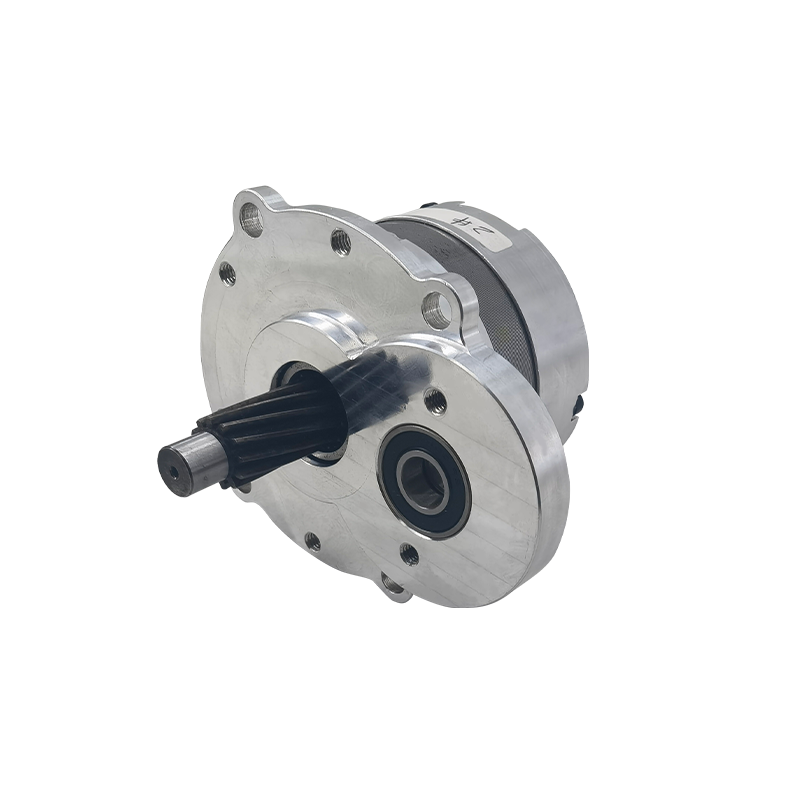
The development of advanced wheel chair motors has transformed the mobility experience for disabled users. Innovations in torque, energy efficiency, customization, and control system integration enhance independence, safety, and comfort. Companies like Retek deliver total motor solutions that combine engineering expertise and close collaboration with clients to provide highly customized, reliable systems for medical, automotive, and residential applications.
A1: Look at torque ratings, gear ratios, and power output. High torque motors are essential for steep inclines, while speed and energy efficiency should also be balanced depending on terrain.
A2: Efficient motors reduce power consumption, extending battery runtime and increasing travel range. They also lower heat generation and reduce wear on motor components.
A3: Custom solutions match user-specific torque, speed, and control requirements. They improve comfort, climbing ability, energy management, and integration with control systems, unlike standard motors.
A4: Brushless motors are more efficient, quieter, and longer-lasting, with reduced maintenance requirements compared to brushed motors, making them ideal for daily wheelchair use.
A5: Control systems regulate speed, acceleration, and direction while providing feedback to ensure stability. Integration allows ergonomic input devices and safety interlocks, improving user experience.
1. Introduction: Deconstructing AC Induction Motor Horsepower The AC Induction Motor is one of the m...
READ MORE1. Introduction In modern industrial automation, data center construction, consumer electronics upgr...
READ MOREStepper motors represent a cornerstone of modern motion control, offering precise positioning and re...
READ MOREThe industrial motor landscape is undergoing a significant transformation, driven by the relentless ...
READ MORERelated Products
Building 10, No.199, Jinfeng Road, Suzhou High-tech, Jiangsu Province, China
+86-133 3869 4967
+86-512 6876 9967
sean@retekmotion.com
rsgrivic@126.com
 WhatsApp
Copyright © Jiangsu Retek Motion Co., Ltd. All Rights Reserved. Custom OEM Industrial Multi Rotor Drone Motors Manufacturers