 Get in touch
 English
 Deutsch
 中文简体
中文简体 Español

1. Introduction: Deconstructing AC Induction Motor Horsepower The AC Induction Motor is one of the m...
READ MOREIndustry News
2026-07-29
Content
A brushed DC motor is a rotating electric motor that uses physical brushes riding on a commutator to switch current direction in the armature windings, producing continuous rotation from a simple DC power source. The design has stayed in production for over a century because it needs no external controller to run — apply DC voltage and the motor turns, with speed and torque responding directly and predictably to that voltage. That simplicity is what still makes brushed DC motors the default choice across a wide range of consumer, automotive, and light industrial equipment.
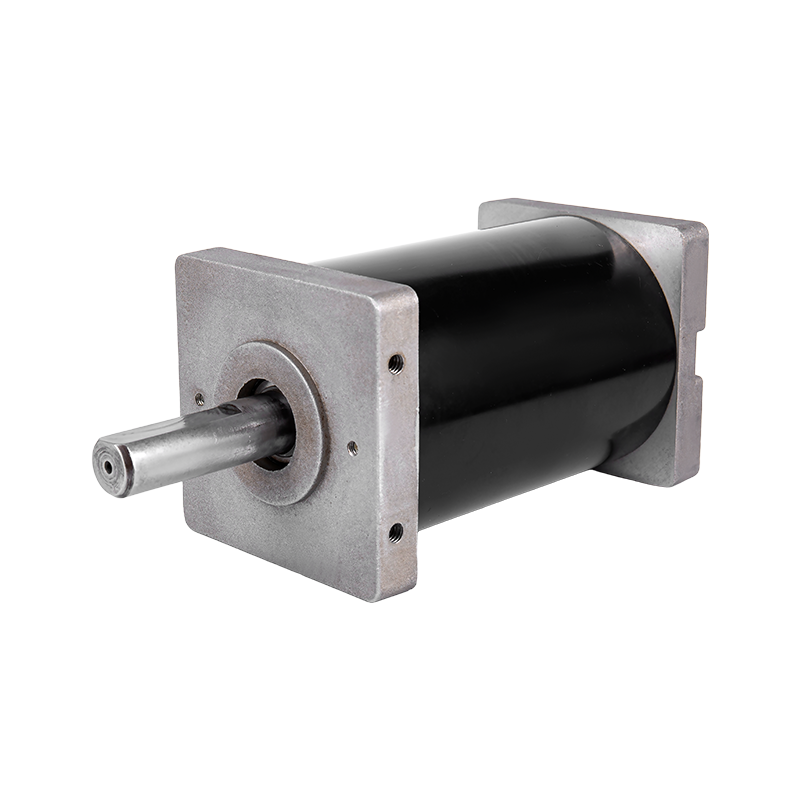
Choosing a brushed DC motor comes down to matching four core parameters to the application, in this order:
Beyond these four, check whether the application needs a gearbox to bring output speed and torque into a usable range, and confirm the motor's thermal rating covers the ambient temperature it will actually operate in — a motor that performs well on a datasheet at 25°C can underperform significantly in a hot enclosure.
A complete brushed DC motor spec sheet gives buyers everything needed to predict how a motor will behave under load, not just at its rated point. The core figures to check are rated voltage, no-load speed, rated torque, stall torque, rated current, no-load current, and efficiency at rated load.
| Specification | What It Tells You |
|---|---|
| Rated voltage | The voltage at which the motor is designed to run continuously without overheating |
| No-load speed | Maximum rotational speed with zero load applied to the shaft |
| Stall torque | Torque produced at zero speed, when the shaft is held stationary — useful for sizing against startup loads |
| Rated current | Continuous current draw at rated torque, used to size wiring and power supply |
Voltage is the primary lever for controlling a brushed DC motor's speed, since speed scales roughly linearly with applied voltage once load is held constant. Common rated voltages run from 3V and 6V for small consumer and toy motors, up to 12V and 24V for automotive and industrial actuators, and 48V or higher for heavier-duty equipment. Running a motor above its rated voltage can push speed and torque higher in the short term, but it also increases heat generation and accelerates brush and bearing wear — a practice generally reserved for brief peak-demand bursts, not continuous operation.
A brushed DC motor's speed is set by the balance between applied voltage and the back-EMF the motor generates as it spins — as speed rises, back-EMF rises with it and effectively limits further acceleration until it approaches the no-load speed rating. Under load, speed drops below the no-load figure because more current (and therefore more torque) is needed to keep the shaft turning against resistance. This is why datasheets list speed at multiple points — no-load, rated load, and stall — rather than a single number.
Torque in a brushed DC motor is directly proportional to armature current, which is why these motors deliver strong torque immediately at startup without needing a ramp-up period — a useful trait for applications facing high inertial loads the instant they're switched on. Torque is highest at stall (zero speed) and decreases roughly linearly as speed increases toward the no-load point, so selecting a motor means checking torque at the actual operating speed the application needs, not just the peak stall figure.
Beyond standard general-purpose motors, brushed DC motors are also built and marketed around specific performance or footprint targets to fit specialized equipment.
A high torque brushed DC motor is optimized with stronger magnets, denser windings, or a larger armature diameter to deliver more torque per amp of current than a standard motor of the same size. These are the right choice for direct-drive applications with heavy startup loads — lifts, winches, and heavy actuators — where adding a gearbox to multiply torque isn't practical.
A high speed brushed DC motor is wound with fewer turns of thinner wire, which lowers torque per amp but raises no-load speed significantly — often into the tens of thousands of RPM. These motors are typically paired with a gearbox to bring output speed down to a usable range while multiplying torque, rather than being run directly at full speed against a load.
Small brushed DC motors — generally under 25mm in diameter — trade absolute power output for compact size, low weight, and low cost, making them standard in consumer electronics, small pumps, camera gimbals, and toys. Because they run at lower current, they're also easier to drive directly from small battery packs without additional power electronics.
Industrial brushed DC motors are built for sustained duty cycles and harsher operating conditions, with features standard consumer motors typically lack: sealed or IP-rated housings, higher-grade bearings, replaceable brush cartridges for easier field maintenance, and thermal protection to prevent winding damage under continuous load.
Brushed DC motors show up wherever simple control and low cost matter more than maximum efficiency: cordless power tools, automotive window lifts and seat actuators, conveyor rollers, small pumps and fans, toys and hobby vehicles, and early-stage robotics prototypes. Their simple two-wire drive circuit also makes them a common first choice when engineers are validating a mechanical design before committing to more complex brushless motor control.
Pairing a brushed DC motor with a gearbox trades output speed for torque, since gear reduction multiplies torque roughly in proportion to the reduction ratio while dividing output speed by the same factor. This combination is common because many brushed motors are wound to spin efficiently at high RPM but low torque — a gearbox brings that output down to a speed and torque range that's actually usable for driving wheels, lead screws, or mechanical linkages. Common gearbox types paired with brushed motors include spur gear, planetary, and worm gear designs, with planetary gearboxes generally preferred where a compact footprint and higher efficiency matter, and worm gearboxes preferred where self-locking output (resistance to back-driving) is required.
Because speed tracks applied voltage so directly, brushed DC motor speed control is simpler than in most other motor types. Two methods dominate:
1. Introduction: Deconstructing AC Induction Motor Horsepower The AC Induction Motor is one of the m...
READ MORE1. Introduction In modern industrial automation, data center construction, consumer electronics upgr...
READ MOREStepper motors represent a cornerstone of modern motion control, offering precise positioning and re...
READ MOREThe industrial motor landscape is undergoing a significant transformation, driven by the relentless ...
READ MORERelated Products
Building 10, No.199, Jinfeng Road, Suzhou High-tech, Jiangsu Province, China
+86-133 3869 4967
+86-512 6876 9967
sean@retekmotion.com
rsgrivic@126.com
 WhatsApp
Copyright © Jiangsu Retek Motion Co., Ltd. All Rights Reserved. Custom OEM Industrial Multi Rotor Drone Motors Manufacturers