 Get in touch
 English
 Deutsch
 中文简体
中文简体 Español

1. Introduction: Deconstructing AC Induction Motor Horsepower The AC Induction Motor is one of the m...
READ MOREIndustry News
2026-08-04
Content
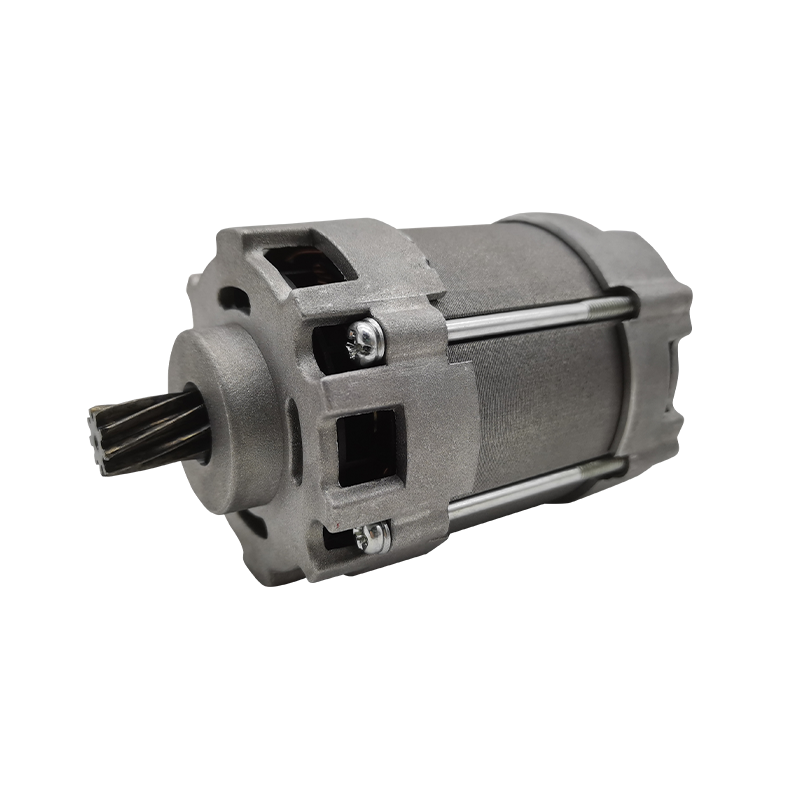
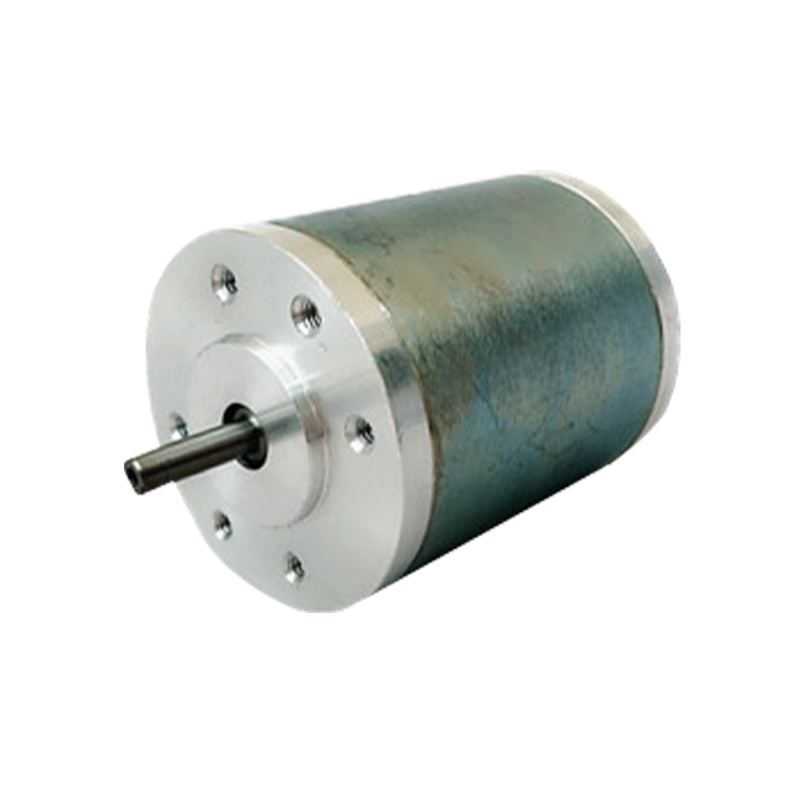
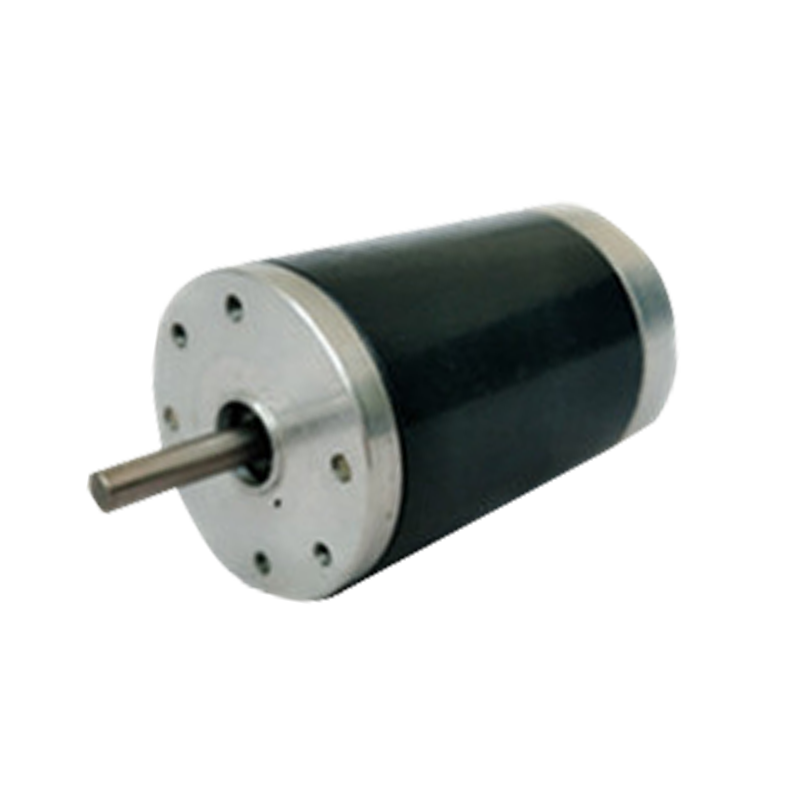
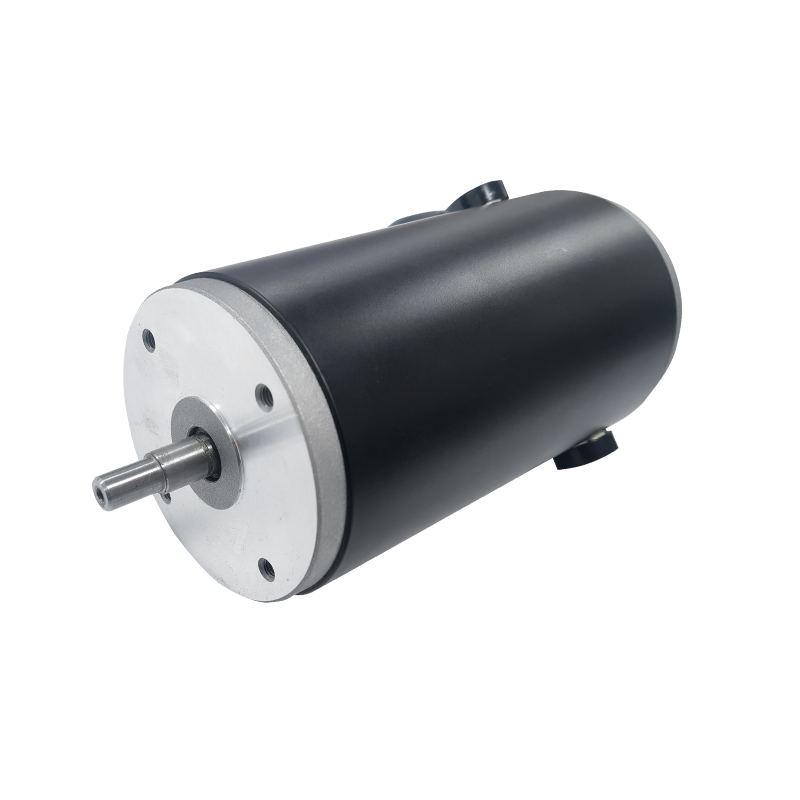
A brushed DC motor is an electric motor that converts direct current into rotational motion using a mechanical commutation system — a set of carbon or copper-graphite brushes making sliding contact with a rotating commutator to deliver current to the armature windings in the correct sequence. It's the oldest and mechanically simplest form of DC motor, and remains widely used wherever low cost and simple control matter more than maximum efficiency or service life.
The defining feature that separates it from a brushless motor is exactly this brush-and-commutator system: current reversal happens automatically through physical contact and mechanical switching, rather than through an external electronic controller.
Current flows from the power supply through the brushes into the commutator, which routes it into the armature windings. This current creates a magnetic field around the armature that interacts with the motor's fixed field (from permanent magnets or field windings), producing a torque that rotates the shaft. As the armature turns, the commutator segments rotate past the stationary brushes, automatically reversing the current direction in each winding at the correct moment to keep the torque acting in a consistent rotational direction.
This mechanical switching is what makes brushed motors self-commutating — no external electronics are needed to determine when to reverse current, unlike a brushless motor, which depends on sensors and a controller to perform the same function electronically.
Key mechanism
The brush-commutator contact is both the motor's greatest simplicity advantage and its primary wear point — it enables current reversal with no electronics, but also means physical contact friction is inherent to how the motor runs.
| Component | Function |
|---|---|
| Armature (rotor) | Rotating winding that carries current and generates torque |
| Commutator | Segmented rotating contact that reverses current direction in the windings |
| Brushes | Stationary carbon/graphite contacts that deliver current to the commutator |
| Stator/field | Permanent magnets or field windings that produce the fixed magnetic field |
| Shaft and bearings | Support rotation and transmit mechanical output to the load |
Brush wear is the primary factor limiting a brushed DC motor's service life, and it accelerates with higher current draw, higher speed, and dustier or dirtier operating environments. Typical brush life ranges from several hundred to a few thousand hours depending on duty cycle, load, and brush material, with motors run intermittently at light load lasting considerably longer than those run continuously under heavy load.
Brushed DC motors are controlled primarily through voltage adjustment, since speed is roughly proportional to applied voltage and torque is roughly proportional to current draw. The most common control method is pulse-width modulation (PWM), where a controller switches full supply voltage on and off rapidly, and the ratio of on-time to off-time (duty cycle) determines the effective average voltage the motor sees.
Direction control is handled through an H-bridge circuit, which allows current to flow through the motor in either direction by switching which supply terminals connect to which motor terminals. Combining PWM speed control with H-bridge direction control gives full speed and direction control from simple, low-cost driver circuitry, which is part of why brushed motors remain popular in cost-sensitive applications.
1. Introduction: Deconstructing AC Induction Motor Horsepower The AC Induction Motor is one of the m...
READ MORE1. Introduction In modern industrial automation, data center construction, consumer electronics upgr...
READ MOREStepper motors represent a cornerstone of modern motion control, offering precise positioning and re...
READ MOREThe industrial motor landscape is undergoing a significant transformation, driven by the relentless ...
READ MORERelated Products
Building 10, No.199, Jinfeng Road, Suzhou High-tech, Jiangsu Province, China
+86-133 3869 4967
+86-512 6876 9967
sean@retekmotion.com
rsgrivic@126.com
 WhatsApp
Copyright © Jiangsu Retek Motion Co., Ltd. All Rights Reserved. Custom OEM Industrial Multi Rotor Drone Motors Manufacturers