 Get in touch
 English
 Deutsch
 中文简体
中文简体 Español

1. Introduction: Deconstructing AC Induction Motor Horsepower The AC Induction Motor is one of the m...
READ MOREIndustry News
2026-07-20
Content
A brushed DC motor generates rotation using physical carbon or metal-graphite brushes that make sliding contact with a rotating commutator, switching current direction in the armature windings as the shaft turns. This mechanical commutation is what separates brushed motors from brushless designs, which handle the same switching electronically. The brush-commutator contact is simple and inexpensive to manufacture, which is why brushed DC motors remain the default choice in cost-sensitive, low-duty-cycle applications despite being decades-old technology.
A typical brushed motor has three core components: a stationary stator (permanent magnets or field windings), a rotating armature wound with copper coils, and the brush-commutator assembly that feeds current into the armature at the correct moments to keep torque flowing in one direction.
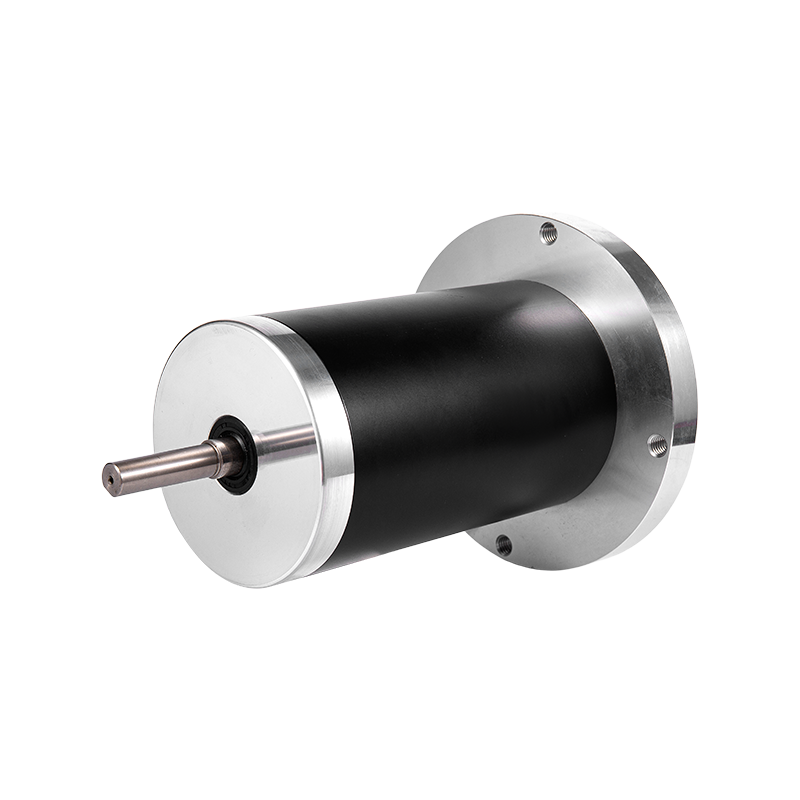
The core difference between brushed and brushless DC motors comes down to how current is commutated: brushed motors do it mechanically through physical brush contact, while brushless motors use an electronic controller to switch current through the windings based on rotor position sensing. That single design difference cascades into most of the practical trade-offs buyers weigh when choosing between the two.
| Factor | Brushed DC Motor | Brushless DC Motor |
|---|---|---|
| Upfront cost | Lower — simple construction, no controller required | Higher — needs an electronic speed controller |
| Maintenance | Brushes wear and need periodic replacement | Minimal — no wear parts in the commutation path |
| Efficiency | Lower due to brush friction and voltage drop | Higher — no mechanical friction losses at the commutator |
| Lifespan | Limited by brush wear, typically 1,000–3,000 hours | Much longer — often 10,000+ hours |
| Speed control | Simple — direct voltage or PWM control | Requires a dedicated controller with position feedback |
Brushed DC motors and AC motors solve the power problem differently at the source: DC motors run directly off a battery or rectified DC supply and offer near-instant, precise speed and torque control by simply varying voltage, while AC motors run on alternating current and depend on frequency to set speed — which is why AC motor speed control typically requires a variable frequency drive (VFD) rather than a simple voltage adjustment. For battery-powered or portable equipment, brushed DC motors are usually the more practical choice since they need no AC-to-DC conversion. For fixed industrial installations already wired for three-phase AC power, AC motors often win on ruggedness and lower long-term maintenance, since they have no brushes to wear out. The trade-off buyers should weigh is deployment simplicity and control precision (favoring DC) against long-service-life ruggedness on a fixed power grid (favoring AC).
The right choice usually comes down to duty cycle and budget rather than raw performance specs. Use this quick filter when specifying a motor:
Advantages:
Disadvantages:
Brushed DC motors remain common wherever low cost, simple control, and moderate duty cycles line up: cordless power tools, automotive components like window lifts and seat adjusters, toys and hobby vehicles, small pumps and fans, conveyor rollers, and basic robotics prototyping. Their simple two-wire control also makes them a common choice for early-stage product development, where engineers want to validate mechanical design before investing in brushless motor controllers.
Typical brushed DC motor efficiency ranges from around 75% to 85%, lower than the 85–95% range common in comparable brushless motors, mainly because of two loss sources unique to brush commutation: friction between the brushes and commutator, and the voltage drop that occurs across the brush contact itself. Efficiency also degrades gradually over the motor's life as brushes wear and contact resistance increases, which is one reason brushed motors are a poor fit for applications where consistent efficiency over years of operation matters more than low upfront cost.
Speed control on a brushed DC motor is direct because speed is roughly proportional to applied voltage — no controller intelligence is required to interpret rotor position, unlike brushless designs. Two methods dominate in practice:
Brushed DC motors produce torque that is directly proportional to armature current, which is what gives them a well-known advantage: strong, immediate starting torque without needing a ramp-up curve. This makes them a good fit for applications with high inertial loads at startup, such as power tools driving into resistance the instant they're triggered. Torque output does taper as speed increases toward the motor's rated no-load speed, following a roughly linear torque-speed curve that engineers use to size motors against expected load conditions.
Lifespan is the single biggest limitation of brushed DC motor technology, and it's almost entirely dictated by brush wear rather than the motor's electrical or magnetic components. Typical service life runs from around 1,000 to 3,000 hours in continuous operation for standard carbon brushes, though this varies significantly with load, ambient temperature, and brush material — precious-metal or long-life brush formulations can extend service life meaningfully, but at a higher unit cost. Once brushes wear past their usable contact area, commutation becomes inconsistent, causing sparking, torque ripple, and eventually motor failure.
Because brush wear is progressive and predictable, most maintenance programs are built around scheduled inspection rather than waiting for failure. Key maintenance steps include:
1. Introduction: Deconstructing AC Induction Motor Horsepower The AC Induction Motor is one of the m...
READ MORE1. Introduction In modern industrial automation, data center construction, consumer electronics upgr...
READ MOREStepper motors represent a cornerstone of modern motion control, offering precise positioning and re...
READ MOREThe industrial motor landscape is undergoing a significant transformation, driven by the relentless ...
READ MORERelated Products
Building 10, No.199, Jinfeng Road, Suzhou High-tech, Jiangsu Province, China
+86-133 3869 4967
+86-512 6876 9967
sean@retekmotion.com
rsgrivic@126.com
 WhatsApp
Copyright © Jiangsu Retek Motion Co., Ltd. All Rights Reserved. Custom OEM Industrial Multi Rotor Drone Motors Manufacturers