 Get in touch
 English
 Deutsch
 中文简体
 Español


1. Introduction: Deconstructing AC Induction Motor Horsepower The AC Induction Motor is one of the m...
READ MOREIndustry News
2026-10-23
Content
A 24 V blower motor that dies at 3,000 hours because its carbon brushes have worn to nothing costs far more than the motor. It costs a service call, a replacement unit, and a line that sits idle while both happen.
What is a brushless motor, in one sentence? It is a DC motor that removes the brushes, the commutator, and the sliding electrical contact between them, and hands the switching job to a controller and a set of power transistors. Magnets, windings, bearings, and a shaft all stay. The change is where commutation happens, and that single change rewrites efficiency, service life, noise, and cost.
This article covers how a brushless motor works, what the numbers on a datasheet really measure, where the technology earns its premium, and how to specify one without paying for capability your application never uses.
A brushless motor is a permanent-magnet synchronous machine driven by an electronic controller; the word describes commutation, not one fixed mechanical layout.
Three parts do the work. A rotor carries permanent magnets, a stator carries copper windings, and a drive switches current between those windings in a timed sequence. Nothing slides against anything to move current, so there is no brush dust, no commutator wear, and no arcing at a contact point.
Definition: A brushless DC motor (BLDC) is a synchronous motor with permanent magnets on the rotor and wound coils on the stator, where an electronic drive energizes those coils in sequence based on rotor position, producing torque without brush-to-commutator contact.
What it is not matters just as much. It is not an AC induction motor, which induces rotor current and needs no magnets. It is not a stepper motor, which steps by design. And it is not simply a DC motor with the brushes deleted, because that deletion changes the electromagnetic design, the thermal path, and the electronics together. Suppliers such as Jiangsu Retek Motion Co., Ltd. build the same basic machine from roughly 22 mm to 130 mm in diameter, in inner-rotor and outer-rotor formats.
A brushless motor produces torque only when the controller knows where the rotor is, because a winding can push the magnets productively only at the right moment.
A brushed motor solves that mechanically: as the rotor turns, commutator segments swap which coil carries current. A brushless drive does the same job with three half-bridges and a switching pattern. Early drives used three Hall-effect sensors to read position. Modern sensorless drives read the back-EMF in the unpowered winding and infer position from its zero crossing. The goal is identical in both cases: keep the stator field about 90 electrical degrees ahead of the rotor field, and torque follows.
Six-step, trapezoidal
Field-oriented control
Many suppliers ship both options. An integrated controller BLDC motor arrives with drive and machine already matched, which removes an entire round of compatibility testing from the project schedule.
Brushless motors win on efficiency, service life, and controllability, and they lose on upfront cost and electronics complexity. Those two costs are the whole argument.
| Attribute | Brushed DC | Brushless DC |
| Commutation | Mechanical, through brush and commutator contact | Electronic, through controller and power stage |
| Full-load efficiency | About 65 to 75 percent | About 82 to 92 percent |
| Service interval | Brush replacement at 1,000 to 3,000 hours | Bearing-limited, 10,000 to 20,000 hours or more |
| Speed control | Voltage sets speed; torque droops under load | Closed loop holds speed and torque precisely |
| Noise and EMI | Audible brush noise plus broadband arcing | Quieter, with switching harmonics instead of arcing |
| Cost structure | Cheaper motor, no drive electronics | Higher unit cost, mandatory drive, no brush service |
A brushless motor is not automatically efficient; the drive strategy and the load point decide the final number.
A well-made brushed motor still peaks near 70 to 75 percent. A brushless machine with six-step commutation typically lands around 82 percent, and a field-oriented drive pushes 89 percent or more. The gap widens at partial load, where a fixed-voltage brushed motor loses speed and efficiency at the same time while a closed-loop drive simply holds the operating point.
Typical full-load efficiency by motor and drive type
Typical values for mid-size frames at rated load. Actual results depend on winding, load point, and drive tuning.
89%
Typical peak efficiency, FOC drive
15,000 h
Typical running hours before bearing service
10-20 pts
Efficiency gain over brushed at the same load
The second gain is thermal. In a brushed motor, part of the loss sits in the rotor, where heat is hardest to remove. In a brushless motor the copper sits in the stator, bolted to the housing, so the same loss leaves through the frame. That matters most in sealed products: for an IP65 washdown unit or a fan motor inside a refrigeration cabinet, ten watts of saved loss changes winding temperature, which changes magnet strength, which shifts the torque constant. The engineering case behind that argument is set out in this comparison of industrial brushless DC motors with older motor technologies.
Two brushless motors with the same 57 mm housing can differ by a factor of three in continuous torque, because winding turns, magnet grade, and stack length decide the result, not the frame size alone.
Kv is unloaded speed per volt, in rpm per volt. Kt is torque per amp, in newton-meters per amp. They are reciprocals scaled by constants, so a 100 Kv motor is a high-speed, low-torque machine and a 30 Kv motor is the opposite. Winding more turns of thinner wire lowers Kv, raises Kt, and raises resistance, so the motor runs hotter for the same output torque. That trade is the single most common source of overheating in first prototypes.
A 24 V motor and a 310 V motor can deliver identical output. Higher voltage means lower current for the same watts, thinner copper, and a smaller drive, which is why industrial blowers and traction motors run at 310 V while battery tools stay at 12 to 24 V. What limits any of them is thermal margin: winding insulation class, usually Class F at 155 C, sets the ceiling, and the duty cycle decides how close you sit to it.
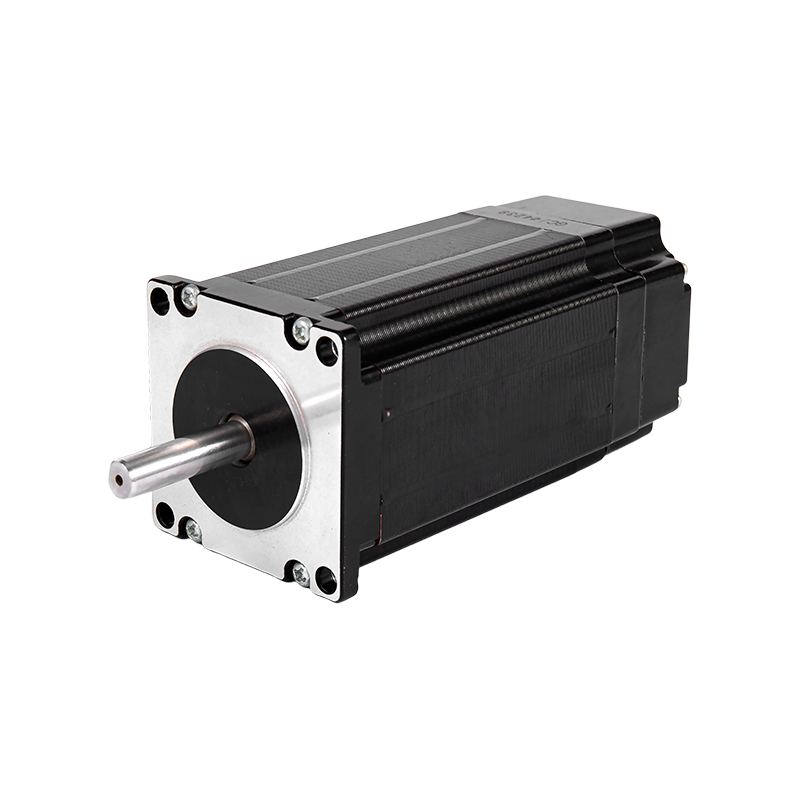
In the middle of that range, a 57 mm standard BLDC such as the BL57 series typically delivers 200 to 500 W continuously, depending on winding and cooling.
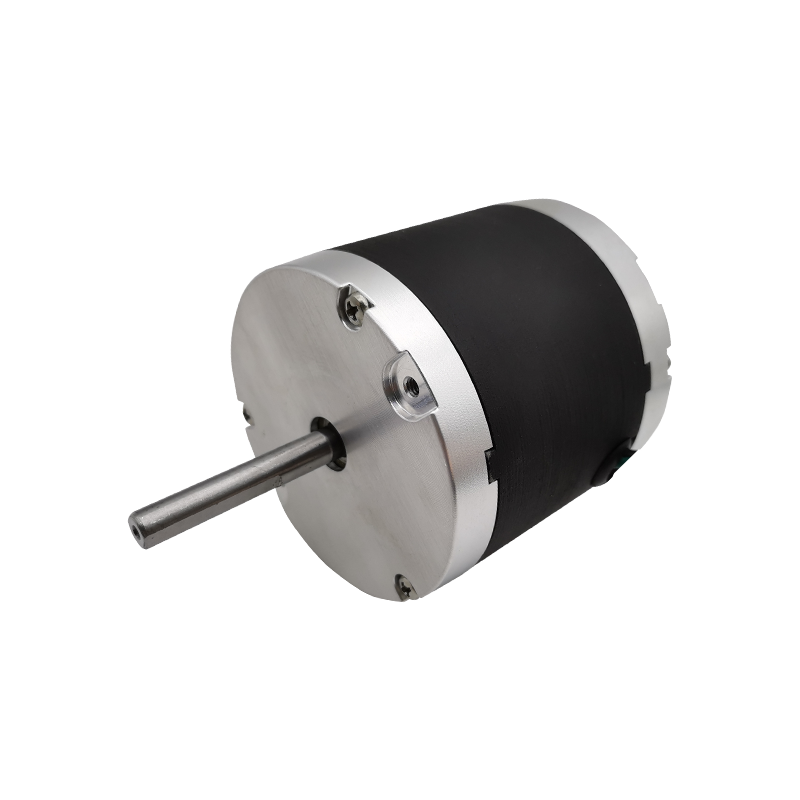
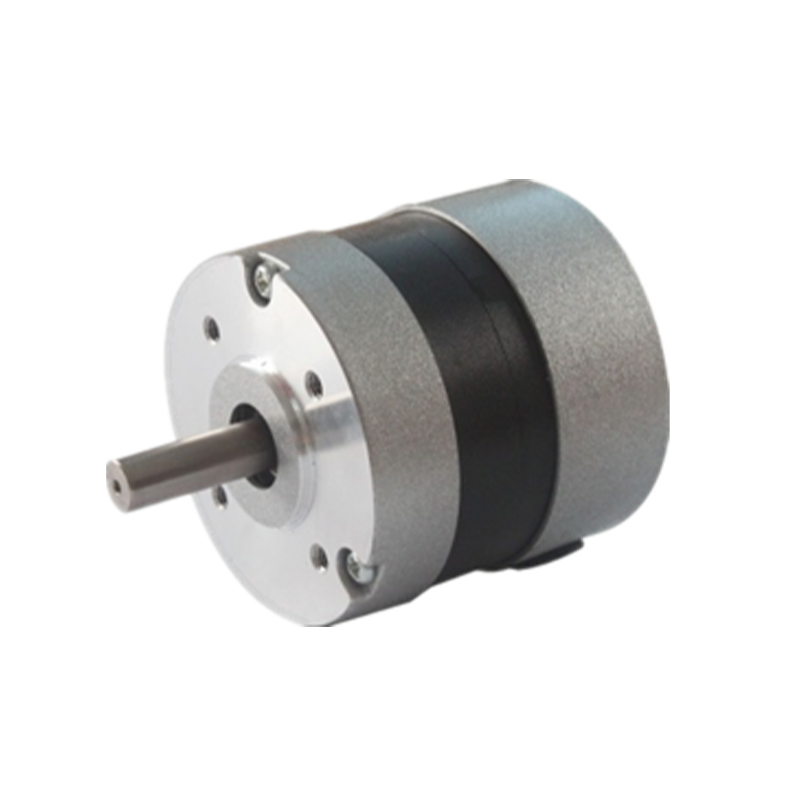 BL57 57 mm Brushless DC MotorA 57 mm brushless DC motor for efficient, long-life, low-noise designs; relevant when specifying a standard mid-range BLDC.View Product →
| Frame diameter | Voltage class | Continuous power | Common equipment |
| 28 to 30 mm | 12 to 24 V DC | 20 to 80 W | Power tools, steering, handheld devices |
| 42 mm | 24 V DC | 80 to 200 W | Lawn mower drives, robotics, gearmotors |
| 57 mm | 24 to 48 V DC | 200 to 500 W | Pumps, conveyors, automated guided vehicles |
| 80 to 86 mm | 48 to 310 V DC | 400 W to 1.5 kW | HVAC blowers, industrial ventilation |
| 100 to 130 mm | 48 to 310 V DC | 1 to 3 kW | Forklift drives, axial fans, heavy blowers |
Brushless motors dominate three categories: anything battery powered, anything sealed against dust or water, and anything that must hold speed while the load changes.
Handheld devices add a different constraint: the motor must be light and small, not merely efficient. A coreless brushless motor such as the WC-22 series removes the iron from the rotor, which cuts inertia and cogging so a small tool starts smoothly and responds to load instantly.
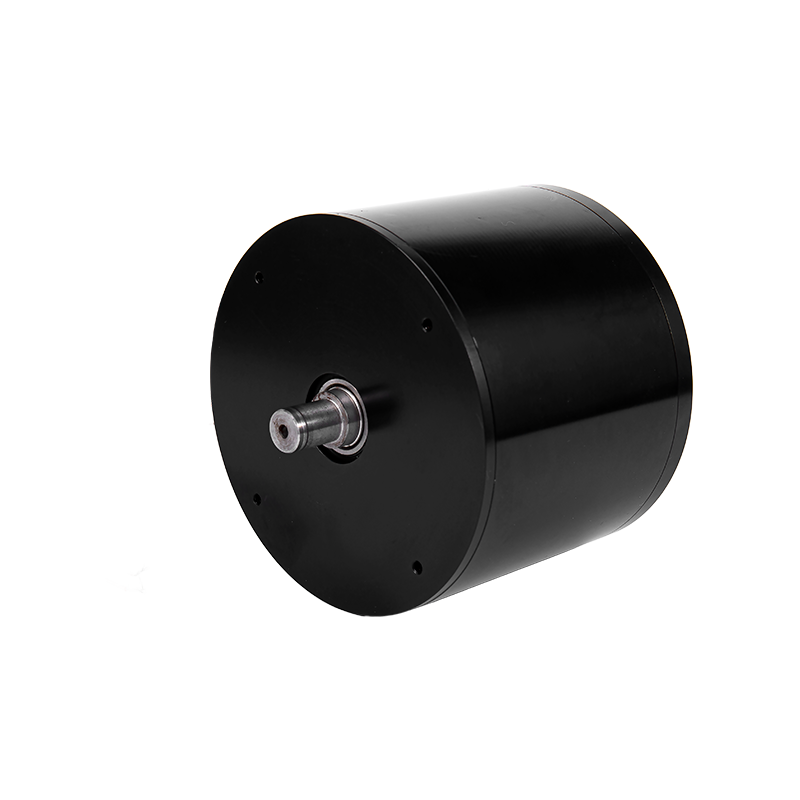
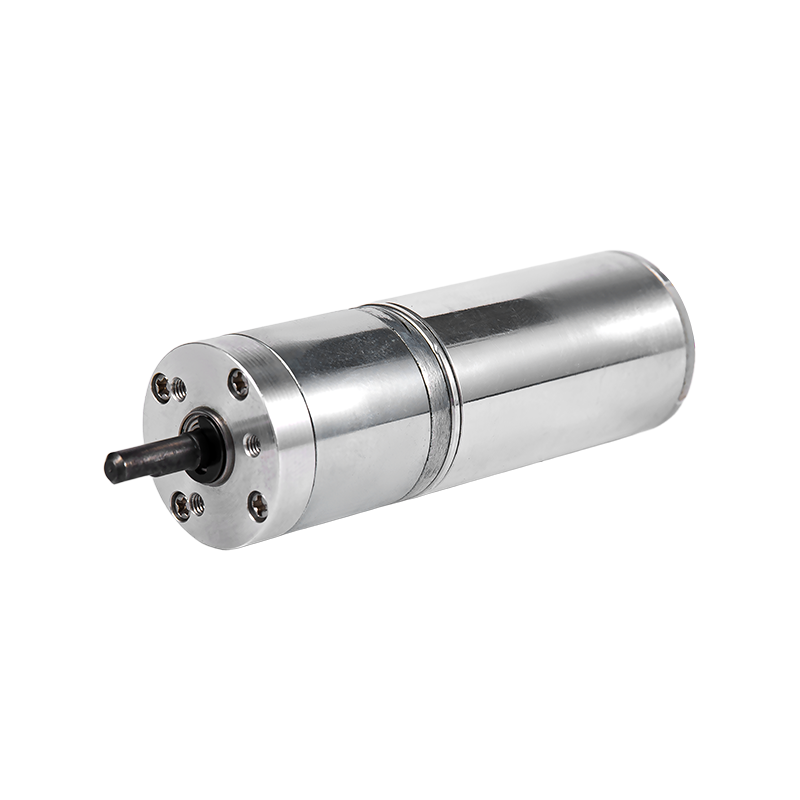 WC-22 22 mm Coreless Brushless DC MotorA 22 mm coreless BLDC motor for compact, space-constrained systems, offering reduced weight, smooth operation, and low vibration; useful for small handheld designs.View Product →
Start with three numbers: continuous torque at the operating speed, the ambient temperature the motor sits in, and the duty cycle. Every other specification is a constraint on those three.
For compact tool and blower designs, a 28 mm motor from the W28 series gives that balance of torque, airflow, and envelope with room left for a gearbox.
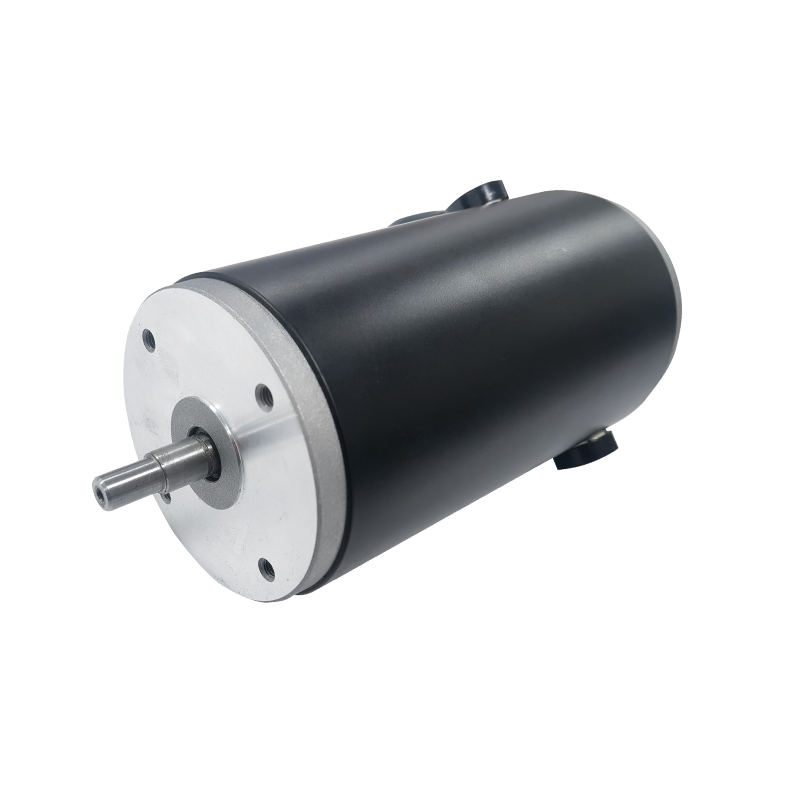
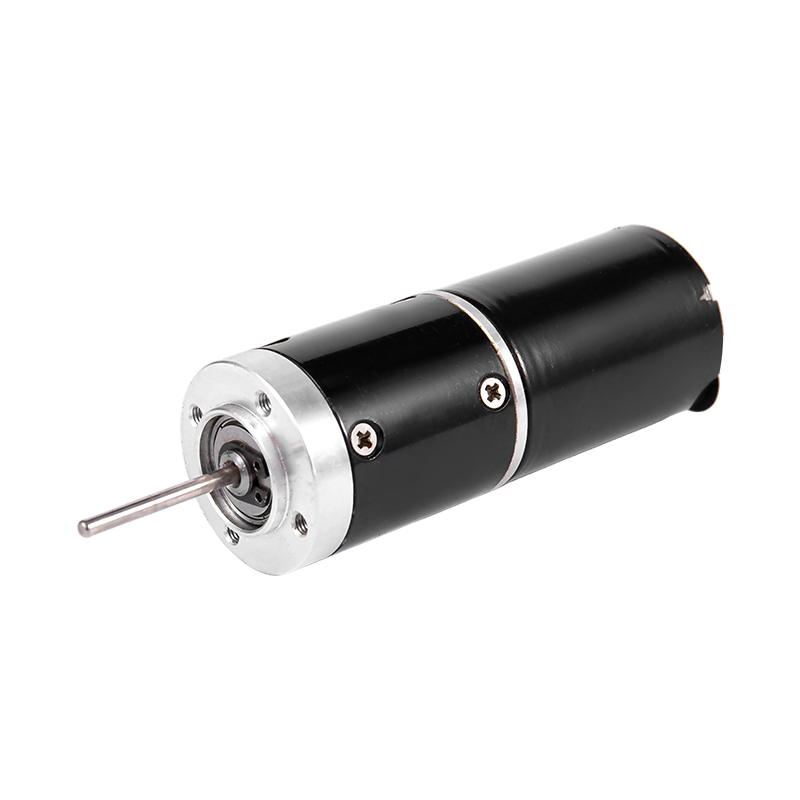 W28 28 mm Brushless DC Motor for Power ToolsA 28 mm brushless DC motor for electric power tools, offering compact integration, high power, and durability; suitable when tool/blower envelope and gearbox room matter.View Product →
Then ask for data you can verify: no-load current, winding resistance, Kt, and a load curve drawn at your operating point. If a supplier can quote only Kv, they have not modeled your application. Custom builders such as Jiangsu Retek Motion Co., Ltd. design each model to the customer specification and quote from an RFQ, which is the right format for this kind of selection work.
A brushless motor runs from DC and converts it inside the drive. Current in the stator windings alternates because the controller switches it, but the supply, the magnetics, and the torque production are DC-based. That is why the same machine is also called an electronically commutated motor, or ECM.
Bearing life usually decides, not the windings. Quality brushless motors in continuous industrial duty reach 10,000 to 20,000 hours, and sealed units with good bearings can exceed that. Watch bearing lubrication, magnet temperature, and drive capacitors. Brush wear is not on the list, because there are no brushes.
No. Without a drive the windings never switch and the rotor cannot produce continuous torque. The controller is part of the motor specification rather than an accessory, so its current rating, switching frequency, and control mode matter as much as the motor's Kv.
Not always. Sensorless drives work well above roughly 10 percent of rated speed, where back-EMF is strong enough to read reliably. Below that, in a loaded start, a slow jog, or a direct-drive joint that must hold position at zero speed, Hall sensors or an encoder are the dependable answer.
1. Introduction: Deconstructing AC Induction Motor Horsepower The AC Induction Motor is one of the m...
READ MORE1. Introduction In modern industrial automation, data center construction, consumer electronics upgr...
READ MOREStepper motors represent a cornerstone of modern motion control, offering precise positioning and re...
READ MOREThe industrial motor landscape is undergoing a significant transformation, driven by the relentless ...
READ MORERelated Products
Building 10, No.199, Jinfeng Road, Suzhou High-tech, Jiangsu Province, China
+86-133 3869 4967
+86-512 6876 9967
sean@retekmotion.com
rsgrivic@126.com
 WhatsApp
Copyright © Jiangsu Retek Motion Co., Ltd. All Rights Reserved. Custom OEM Industrial Multi Rotor Drone Motors Manufacturers