 Get in touch
 English
 Deutsch
 中文简体
中文简体 Español

1. Introduction: Deconstructing AC Induction Motor Horsepower The AC Induction Motor is one of the m...
READ MOREIndustry News
2026-02-24
Content
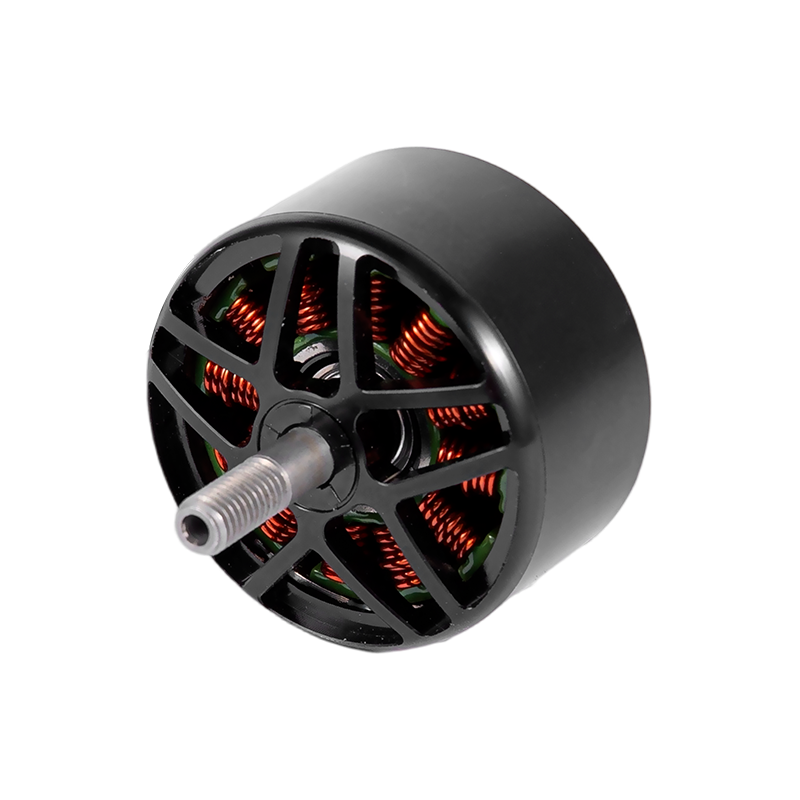
In the realm of electromechanical design, the demand for extreme power density and high reliability has positioned Micro Brushless DC Motors as the preferred choice for engineers. Unlike their brushed counterparts, these compact actuators eliminate mechanical commutation, drastically reducing electromagnetic interference (EMI) and extending operational lifespan. As automation pushes into the sub-centimeter scale, understanding the micro brushless dc motor efficiency and thermal management becomes paramount for successful system integration.
The internal topology of Micro Brushless DC Motors significantly dictates their performance characteristics. A coreless vs slotted BLDC motor comparison reveals that coreless designs utilize a self-supporting basket-shaped winding, eliminating the iron core. This results in zero cogging torque and exceptionally smooth rotation at low speeds. Conversely, slotted motors utilize a silicon steel laminated core, which provides higher torque density but introduces magnetic detent (cogging). For applications requiring rapid acceleration and deceleration, the high speed micro BLDC motor with a coreless rotor is often superior due to its lower inertia.
| Feature | Coreless Micro BLDC | Slotted Micro BLDC |
| Cogging Torque | Zero (Smooth rotation) | Present (Detent effect) |
| Torque Density | Moderate | High |
| Rotor Inertia | Extremely Low | Higher |
| Heat Dissipation | Lower (Air gap) | Higher (Conductive core) |
Efficiency in Micro Brushless DC Motors is not merely about power conversion; it is about heat mitigation in confined spaces. Because these motors often operate in sealed enclosures, I2R losses (copper losses) and eddy current losses must be minimized. High-grade neodymium magnets and precision-wound coils contribute to a high efficiency micro brushless motor profile, often exceeding 85%—a significant leap over traditional DC motors. When evaluating micro BLDC motor power density, engineers must calculate the thermal resistance from the winding to the ambient environment to prevent permanent demagnetization of the magnets under heavy loads.
Precision motion control at the micro-scale requires sophisticated feedback loops. While sensored vs sensorless micro BLDC motors both offer advantages, the choice depends on the starting torque requirements. Sensored motors use Hall effect sensors to detect the exact position of the rotor, allowing for high torque at zero speed. Sensorless versions rely on Back Electromotive Force (BEMF) zero-crossing detection, which is highly effective for high-speed applications like fans or pumps but struggles at very low RPMs. For medical surgical tools, a low noise micro brushless motor is achieved by using sinusoidal wave driving techniques rather than traditional square wave (trapezoidal) commutation.
The feedback mechanism determines the motor's ability to handle variable loads and its overall footprint.
| Mechanism | Sensored Commutation | Sensorless Commutation |
| Low Speed Performance | Excellent (Full torque) | Poor (Requires startup ramp) |
| Wiring Complexity | High (8+ wires) | Low (3 phase wires) |
| System Cost | Higher | Lower |
| Reliability | Moderate (Sensor failure risk) | Highest |
Choosing the correct micro BLDC motor for drones or micro brushless motors for medical devices requires a deep dive into the micro BLDC motor torque constant (Kt) and voltage constant (Kv). In aerospace, weight is the primary constraint, leading designers toward outrunner motor topologies that offer higher torque without gearboxes. In contrast, medical handheld devices often utilize inrunner designs for high-speed surgical drilling. A long life micro BLDC motor is guaranteed by high-quality ball bearings and vacuum-impregnated windings that resist vibration and moisture.
The future of Micro Brushless DC Motors lies in further miniaturization and the integration of smart electronics. As micro brushless dc motor efficiency continues to improve through better magnetic materials and 3D-printed coils, we will see these motors powering the next generation of nanobots and ultra-portable consumer electronics. For engineers, the challenge remains balancing the micro BLDC motor power density with the mechanical constraints of the target application.
It determines the ""feel"" of the movement. Coreless motors are essential for haptic feedback and smooth robotic joints because they do not have cogging torque, whereas slotted motors are better for static load holding.
Yes, but it requires a high-resolution sensored controller. Without sensors, the motor may stutter at low RPMs because the BEMF signal is too weak for the controller to read accurately.
Most professional-grade micro BLDCs operate between 80% and 90% efficiency. This is much higher than micro brushed motors, which often peak at 50-60% due to brush friction and contact resistance.
Only specifically designed models. These motors use special resins and stainless steel alloys to withstand the high temperature and pressure of sterilization cycles without losing magnetic strength.
The torque constant (Kt) is inversely related to the Kv. Kt (Nm/A) = 9.5493 / Kv. This allows engineers to determine how much current is needed to achieve a specific torque output.
1. Introduction: Deconstructing AC Induction Motor Horsepower The AC Induction Motor is one of the m...
READ MORE1. Introduction In modern industrial automation, data center construction, consumer electronics upgr...
READ MOREStepper motors represent a cornerstone of modern motion control, offering precise positioning and re...
READ MOREThe industrial motor landscape is undergoing a significant transformation, driven by the relentless ...
READ MORERelated Products
Building 10, No.199, Jinfeng Road, Suzhou High-tech, Jiangsu Province, China
+86-133 3869 4967
+86-512 6876 9967
sean@retekmotion.com
rsgrivic@126.com
 WhatsApp
Copyright © Jiangsu Retek Motion Co., Ltd. All Rights Reserved. Custom OEM Industrial Multi Rotor Drone Motors Manufacturers