 Get in touch
 English
 Deutsch
 中文简体
中文简体 Español

1. Introduction: Deconstructing AC Induction Motor Horsepower The AC Induction Motor is one of the m...
READ MOREIndustry News
2025-12-19
Content
Electronically Commutated (EC) fan motors represent a significant leap forward in motor technology, combining the reliability of AC induction with the precise control and efficiency of DC brushless operation. At their core, EC motors are synchronous motors that operate on direct current but incorporate an integrated inverter/switching power supply to function from a single-phase or three-phase AC power source. This ingenious design eliminates the need for mechanical brushes and commutators found in traditional motors, leading to a host of advantages including reduced maintenance, lower noise, and vastly superior energy efficiency. The heart of an EC motor is its permanent magnet rotor and the electronic controller that precisely manages the phase and amplitude of the DC current pulses to the stator windings. This precise electronic commutation is what allows for the exceptional speed control and operational smoothness that define modern EC motor systems.
The adoption of EC technology is rapidly becoming the standard across industries where air movement, thermal management, and energy consumption are critical. From quiet residential ventilation to demanding industrial exhaust systems, the inherent flexibility of EC motors makes them a versatile solution. Unlike other motor suppliers, Retek engineering system prevents the selling of our motors and components by catalogue as every model is customized for our customers. This philosophy is particularly relevant for EC motors, where the integration of motor and drive allows for tailoring performance characteristics like torque curves, speed ranges, and control interfaces to the exact needs of the application. The customers are assured that every component they receive from Retek is designed with their exact specifications in mind, ensuring optimal integration and performance whether for a complex HVAC system or a specialized medical device.
The shift towards EC fan motors is driven by tangible, measurable benefits that impact operational cost, system performance, and environmental compliance. The primary advantage is unparalleled energy efficiency. EC motors often operate at efficiency levels exceeding 90%, significantly higher than the 60-80% typical of shaded-pole or AC induction motors. This efficiency translates directly into lower electricity consumption and reduced heat generation, which in turn can lessen the load on cooling systems. Furthermore, the integrated speed control allows the motor to operate only at the necessary speed for the current demand, avoiding the energy waste inherent in fixed-speed motors that are throttled by dampers or inlet vanes. This capability makes them ideal for applications with variable flow requirements.
Retek products, including advanced EC motor solutions, are widely supplied for residential fans, vents, boats, airplanes, medical facilities, laboratory facilities, trucks and other automotive machines. This broad range highlights the technology's adaptability. In residential and commercial HVAC, EC motors power energy recovery ventilators (ERVs), condensing unit fans, and air handlers quietly and efficiently. In critical environments like medical and laboratory facilities, their reliability, low electromagnetic interference, and precise control are indispensable for maintaining sterile airflow and fume extraction. The automotive and transport sector leverages their compact size and durability for battery thermal management in electric vehicles, cab ventilation in trucks, and climate control in aircraft.
To fully appreciate the value proposition of EC motors, a direct comparison with traditional AC motors is essential. The differences extend beyond simple efficiency ratings to encompass control, lifetime cost, and system integration.
When considering a motor for a new application or a retrofit project, the choice between an AC induction motor and an EC motor involves several key factors. The following table outlines the critical differences across multiple operational and economic dimensions.
| Feature | Traditional AC Induction Motor | EC Fan Motor |
|---|---|---|
| Energy Efficiency | Typically ranges from 60% to 80%, with efficiency dropping significantly at partial loads. | Consistently high, often above 90%, and maintains high efficiency across a wide speed range. |
| Speed Control | Requires external variable frequency drive (VFD) for effective variable speed, adding cost and complexity. | Has integrated, infinitely variable speed control (0-100%) without the need for an external VFD. |
| Heat Generation | Generates more waste heat due to lower efficiency, which can burden cooling systems. | Generates less waste heat, contributing to a cooler operating environment and longer component life. |
| Noise Level | Generally louder, with noise from the motor windings and the need for external control devices. | Remarkably quiet operation due to smooth electronic commutation and optimized fan blade interaction. |
| System Integration | Motor and control are separate entities, requiring more space and wiring. | Motor and controller are a unified, compact package, simplifying installation and saving space. |
This comparison clearly shows that while the initial purchase price of an EC motor may be higher, the total cost of ownership is frequently lower due to massive energy savings, reduced maintenance, and longer service life. Our total solutions at Retek are a combination of our innovation and a close working partnership with our customers and suppliers to navigate these trade-offs and deliver the most cost-effective system over its entire lifecycle.
While EC motors are renowned for their durability and low maintenance, understanding their care ensures maximum longevity and performance. Adhering to proper EC fan motor maintenance tips can prevent downtime and protect your investment. The cornerstone of EC motor maintenance is preventative. Because they lack brushes that physically wear out, the focus shifts to the motor's bearings, electronics, and operating environment.
Unlike standard, off-the-shelf units, a customized EC motor from Retek can be designed with specific environmental seals, higher-grade bearings, or customized thermal management from the outset, directly addressing the maintenance challenges posed by your unique application. Welcome to send us an RFQ, it is believed you will get the best cost-effective products and services here, tailored to reduce long-term maintenance burdens.
Selecting the right EC fan motor for an HVAC application is a critical process that balances technical requirements, system integration, and long-term value. Knowing how to choose an EC fan motor for HVAC involves a systematic evaluation of several parameters beyond just horsepower or physical dimensions. A misapplied motor can lead to inefficiency, noise issues, and premature failure.
The first step is to accurately define the operating point: the required airflow (in CFM or m³/h) at a specific static pressure (in inches of water column or Pascal). The motor and impeller combination must be selected so this operating point falls within the stable, efficient region of the fan curve. An EC motor's variable speed capability provides a cushion, but operating too far from the optimal point wastes energy.
Verify the available power supply (voltage, phase, frequency). Then, determine the required control interface. Does the building management system (BMS) communicate via 0-10V analog signal, PWM, or a digital protocol like Modbus or BACnet? The EC motor must have a compatible controller input. Also, consider if smart features like automatic restart, fault alarm signaling, or constant pressure control are needed.
This complex decision-making process is where Retek's custom engineering philosophy delivers unparalleled value. Rather than forcing a project to adapt to a limited catalogue choice, we collaborate to design a motor that meets all these selection criteria precisely, ensuring optimal HVAC system performance from day one.
The versatility of EC motor technology allows it to meet diametrically opposed requirements: extreme energy efficiency for mission-critical infrastructure and near-silent operation for personal comfort. Two exemplary applications that highlight this range are data centers and residential bedrooms.
Data centers are enormous consumers of electricity, with a significant portion dedicated to cooling IT equipment. The fans within computer room air handlers (CRAHs), chillers, and cooling towers are prime candidates for EC motor retrofits or new installations. Using energy saving EC motors for data centers directly attacks the Power Usage Effectiveness (PUE) metric. Their high part-load efficiency is perfect for data centers, where heat load varies with server utilization. An EC-driven fan can ramp down smoothly during low-load periods, saving energy without the surging associated with on/off controls. The reduced heat output of the motors themselves also slightly lowers the cooling burden. For a facility operating 24/7/365, even a single percentage point improvement in fan efficiency translates to massive cost savings and a smaller carbon footprint, making EC technology a cornerstone of green data center initiatives.
At the other end of the spectrum, occupant comfort and noise minimization are paramount in residential settings, particularly for a quiet EC fan motor for bedroom ventilation. Bathroom exhaust fans, energy recovery ventilators (ERVs), or whole-house fan systems that serve bedrooms must operate without disturbing sleep. The inherently smooth commutation of an EC motor eliminates the magnetic "cogging" and brush noise of traditional motors. When paired with an aerodynamically optimized impeller, the result is exceptionally quiet air movement. Furthermore, the precise speed control allows the fan to run at a very low, virtually inaudible speed for continuous background ventilation, only ramping up when needed (e.g., during a shower). This combination of silence, efficiency, and control makes EC motors the preferred choice for high-end residential and hospitality ventilation projects where occupant comfort is the primary design goal.
Retek's business consists of three platforms: Motors, Die-Casting and CNC manufacturing and wire harness. This integrated manufacturing capability allows us to control the entire production process for these specialized applications. We can craft custom die-cast housings for optimal airflow and noise dampening for a bedroom fan, while also producing the precision CNC-machined components and reliable wire harnesses needed for the robust controllers in data center equipment, all under one roof.
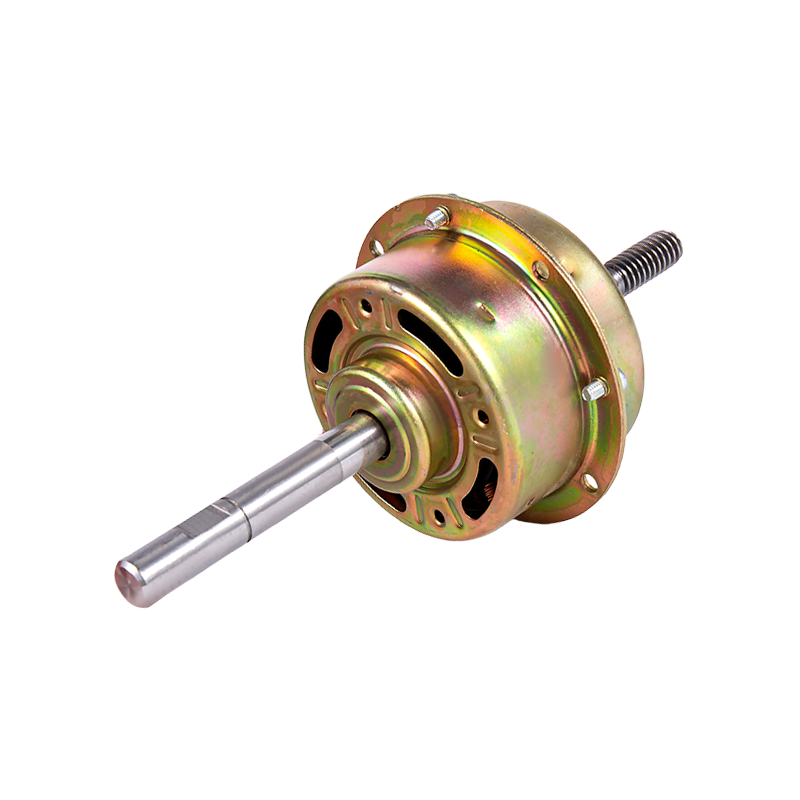
The debate between a brushless EC motor vs AC motor is settled in many advanced applications due to the fundamental technical superiority of the brushless design. The absence of brushes is not merely a maintenance benefit; it enables a cascade of performance improvements. Without brushes, there is no arcing, which is a source of electrical noise (EMI) and a potential ignition source in hazardous environments. This makes EC motors inherently safer and more compatible with sensitive electronic equipment. The elimination of brush friction also contributes directly to the higher efficiency and lower noise.
Beyond the basic comparison, the brushless EC motor excels in dynamic response. The electronic controller can adjust motor speed and torque almost instantaneously in response to a control signal change. This is crucial in applications like precision pressure control in a laboratory fume hood or rapid thermal response in a process cooling system. An AC motor paired with a VFD can also vary speed, but the response time and precision are generally not as sharp. Furthermore, the torque characteristics differ. A well-designed EC motor can provide high starting torque and excellent torque performance across a wide speed range, whereas an AC motor's torque drops off as speed deviates from its synchronous speed. This makes EC motors better suited for applications with high static pressure or variable load conditions.
The integrated design of the EC motor also simplifies system diagnostics. Many modern EC controllers include built-in functions for monitoring operating hours, temperature, speed, and fault conditions. This data can be communicated to a central monitoring system, enabling predictive maintenance. In contrast, a traditional AC motor system requires separate sensors and hardware to achieve similar insight. When evaluating a brushless EC motor vs AC motor for a new, demanding system, the technical edge in control, responsiveness, diagnostics, and system integration overwhelmingly favors EC technology, provided it is correctly applied and sourced from a capable engineering partner like Retek.
The trajectory of motor technology is unequivocally pointing towards greater intelligence, connectivity, and efficiency, with EC motors sitting at the forefront of this evolution. The future will see deeper integration with IoT platforms, more sophisticated onboard diagnostics, and even higher efficiency standards. In this landscape, the ability to customize becomes not a luxury, but a necessity. Off-the-shelf motors may meet a baseline need, but they often force compromises in performance, fit, or control strategy.
This is the core of the Retek value proposition. Our engineering-centric model is built to eliminate these compromises. By engaging in a close working partnership from the conceptual stage, we ensure that the EC motor solution is not merely a purchased component but an engineered subsystem optimized for your specific product—be it a luxury boat's ventilation system, a life-saving medical ventilator, or a high-availability server rack. We don't just sell a motor; we collaborate to solve an air movement challenge, leveraging our integrated motors, die-casting, and CNC manufacturing platforms to deliver a total solution that is reliable, efficient, and perfectly aligned with your specifications. For engineers and specifiers looking to harness the full potential of EC fan motor technology without constraint, the path forward is through partnership with a manufacturer committed to customization as a first principle.
1. Introduction: Deconstructing AC Induction Motor Horsepower The AC Induction Motor is one of the m...
READ MORE1. Introduction In modern industrial automation, data center construction, consumer electronics upgr...
READ MOREStepper motors represent a cornerstone of modern motion control, offering precise positioning and re...
READ MOREThe industrial motor landscape is undergoing a significant transformation, driven by the relentless ...
READ MORERelated Products
Building 10, No.199, Jinfeng Road, Suzhou High-tech, Jiangsu Province, China
+86-133 3869 4967
+86-512 6876 9967
sean@retekmotion.com
rsgrivic@126.com
 WhatsApp
Copyright © Jiangsu Retek Motion Co., Ltd. All Rights Reserved. Custom OEM Industrial Multi Rotor Drone Motors Manufacturers