 Get in touch
 English
 Deutsch
 中文简体
中文简体 Español

1. Introduction: Deconstructing AC Induction Motor Horsepower The AC Induction Motor is one of the m...
READ MOREIndustry News
2026-07-01
Content
A gear motor is a motor and a gearbox engineered together as a single integrated unit, not a standard motor with a gearbox bolted on as an afterthought. The gearbox reduces the motor's output speed while proportionally increasing torque, which is why gear motors are used anywhere a load needs strong, controlled rotational force rather than raw speed. A typical DC motor spinning at 3000 RPM produces relatively low torque on its own; pass that same output through a 30:1 gear reduction and the shaft now turns at 100 RPM with roughly 30 times the torque, minus mechanical losses from friction in the gear train.
The gear ratio, not the motor's raw power rating, is usually the deciding factor in whether a gear motor can handle a given application — a small motor with a high reduction ratio can outperform a larger motor with a low ratio in torque-critical tasks like conveyor drives or gate operators.
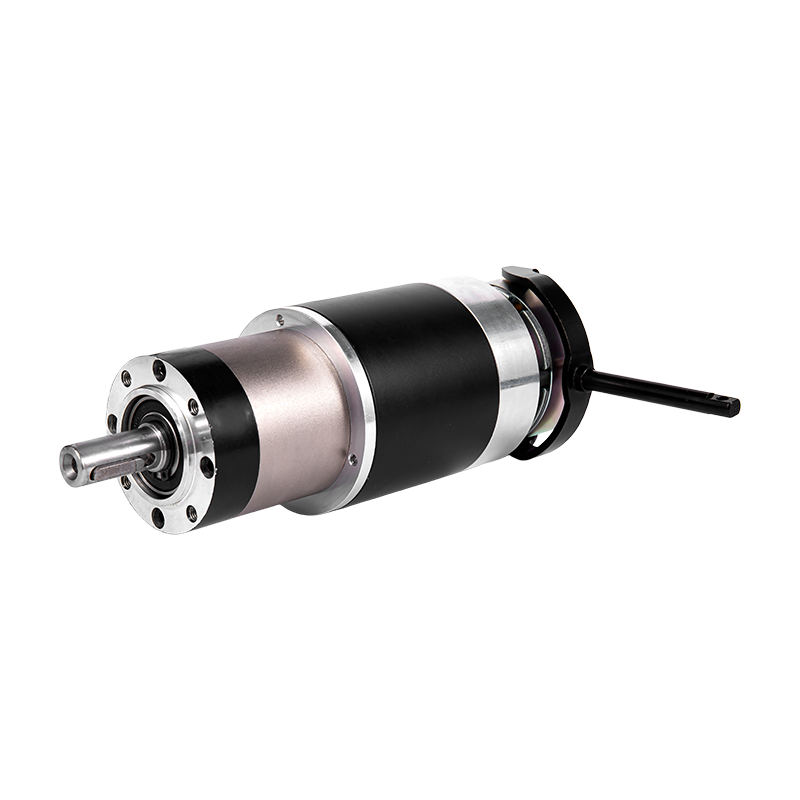
The choice between AC and DC electric gear motors depends less on which is "better" and more on how the application needs to be controlled. AC gear motors run directly off mains power and are generally simpler and more durable for constant-speed, continuous-duty applications like fans, pumps, and packaging line conveyors. DC gear motors offer far more precise speed and direction control through simple voltage adjustment, which makes them the standard choice for battery-powered equipment, robotics, and any application requiring frequent starts, stops, or reversals.
| Factor | AC Gear Motor | DC Gear Motor |
|---|---|---|
| Speed control | Limited without a VFD | Simple via voltage/PWM |
| Power source | Mains AC (110V/220V) | Battery or low-voltage DC (12V/24V) |
| Best for | Continuous-duty industrial equipment | Mobile, battery-powered, precision-control equipment |
| Maintenance | Lower, fewer wear components | Brushed types need periodic brush replacement |
Comparison of AC and DC electric gear motor characteristics across common selection factors.
A high torque 12V gear motor isn't defined by voltage alone — 12V is simply a common low-voltage standard used in automotive, marine, and battery-powered equipment. Torque output actually comes from the combination of gear reduction ratio and the motor's stall torque rating. A 12V motor with a 100:1 gearbox will significantly outtorque a 12V motor with a 10:1 gearbox, even if both draw similar current, because the higher ratio trades speed for mechanical force.
Stall torque and continuous torque are two different figures worth checking on any datasheet — a motor can briefly handle a torque spike near stall without damage, but sustained operation near that limit will overheat the windings and shorten motor life significantly.
Undersizing a gear motor is one of the most common and costly sourcing mistakes, since a motor running consistently near its torque limit fails far sooner than one with reasonable headroom. A practical approach is to calculate the load's required torque at the shaft, add at least 20-30% safety margin, then select a gear ratio and motor combination that comfortably clears that figure at the intended duty cycle. Continuous-duty applications like conveyor belts need a different thermal rating than intermittent-duty applications like gate actuators, even if the peak torque requirement is similar.
1. Introduction: Deconstructing AC Induction Motor Horsepower The AC Induction Motor is one of the m...
READ MORE1. Introduction In modern industrial automation, data center construction, consumer electronics upgr...
READ MOREStepper motors represent a cornerstone of modern motion control, offering precise positioning and re...
READ MOREThe industrial motor landscape is undergoing a significant transformation, driven by the relentless ...
READ MORERelated Products
Building 10, No.199, Jinfeng Road, Suzhou High-tech, Jiangsu Province, China
+86-133 3869 4967
+86-512 6876 9967
sean@retekmotion.com
rsgrivic@126.com
 WhatsApp
Copyright © Jiangsu Retek Motion Co., Ltd. All Rights Reserved. Custom OEM Industrial Multi Rotor Drone Motors Manufacturers