 Get in touch
 English
 Deutsch
 中文简体
中文简体 Español

1. Introduction: Deconstructing AC Induction Motor Horsepower The AC Induction Motor is one of the m...
READ MOREIndustry News
2026-06-23
Content
A brushless DC electric motor (BLDC) generates rotational force through the same fundamental principle as any DC motor — the interaction between a magnetic field and current-carrying conductors — but eliminates the mechanical commutator and carbon brush assembly that defines brushed designs. Instead, electronic commutation via a dedicated motor controller switches current through the stator windings in a precisely timed sequence, rotating the magnetic field and pulling the permanent-magnet rotor along with it.
The rotor carries permanent magnets (typically neodymium-iron-boron in high-performance designs) and has no windings, slip rings, or brushes. A Hall-effect sensor array — or in sensorless designs, back-EMF monitoring — feeds rotor position data to the controller, which determines which winding phases to energise at any given moment. The result is continuous, smooth torque delivery without the arc discharge and friction losses inherent in brush contact. Efficiency rates of 85–95% are typical across the operating range, compared to 75–85% for equivalent brushed motors.
The architectural differences between brushed and brushless designs cascade into meaningful performance, maintenance, and cost implications across the product lifecycle.
| Parameter | Brushless DC | Brushed DC |
|---|---|---|
| Typical efficiency | 85 – 95% | 75 – 85% |
| Service life | 10,000 – 20,000+ hours | 1,000 – 5,000 hours |
| Maintenance requirement | Minimal (bearing lubrication only) | Regular brush inspection and replacement |
| Spark / EMI generation | None | Present at brush-commutator interface |
| Speed-torque linearity | Excellent across full range | Good at rated speed; drops at low RPM |
| Controller required | Yes (ESC or dedicated driver IC) | No (direct DC connection sufficient) |
| Unit cost (motor only) | Higher | Lower |
The absence of sparking makes BLDC motors the only viable choice for explosive or cleanroom environments, where brush arc discharge would either present a fire hazard or introduce particulate contamination. In standard industrial settings, the total cost of ownership calculation typically favours brushless designs once the application runs more than a few thousand hours per year — the savings in brush replacement labour and downtime offset the higher upfront motor and controller cost within 12–24 months.
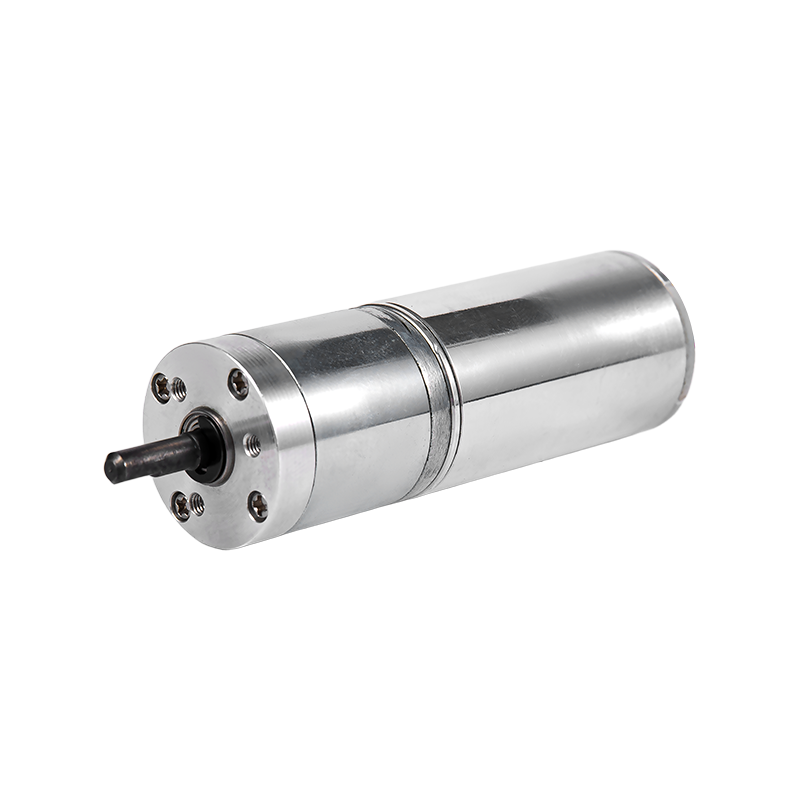
BLDC motors come in two fundamentally different mechanical configurations, and the choice between them is application-driven rather than a matter of performance hierarchy.
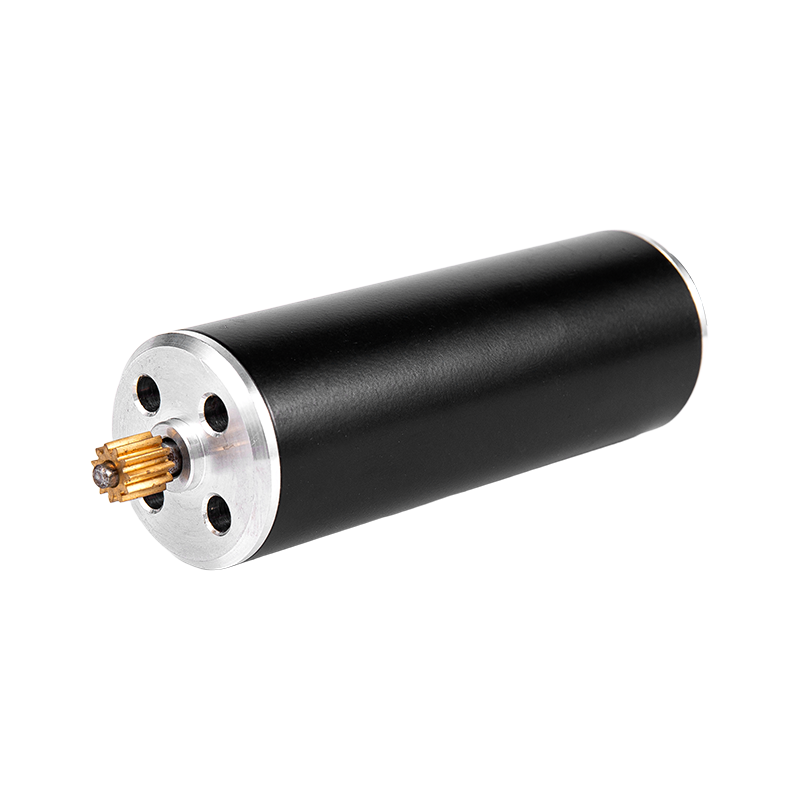
Inner rotor (inrunner) motors position the permanent-magnet rotor inside the stator windings. The rotor mass is small and concentrated near the axis, producing a low moment of inertia and rapid acceleration response. Inrunners operate at high RPM (typically 5,000–50,000 RPM) and pair with gearboxes when high torque at lower shaft speeds is needed. They dominate in robotics, CNC spindles, medical devices, and high-performance power tools.
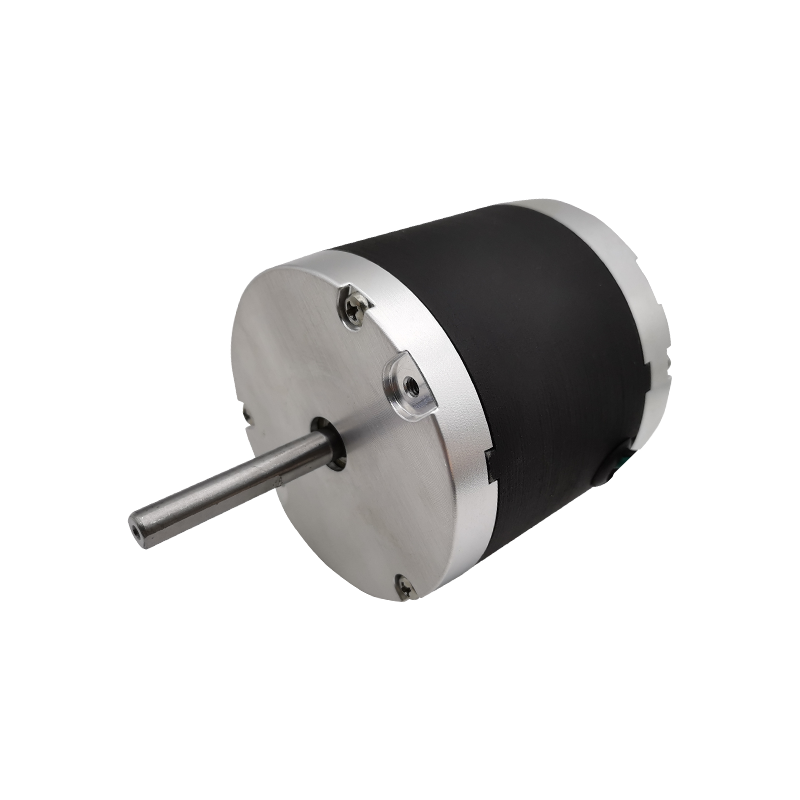
Outer rotor (outrunner) motors wrap the rotor around the outside of the stator, placing the magnet mass at the maximum possible radius from the axis. This geometry inherently generates high torque at low RPM, making direct-drive applications — fans, drone propellers, electric bicycle hubs, and direct-drive washing machines — natural fits. Outrunners are typically wider and shorter than inrunners of equivalent power and produce smoother torque at low speeds without requiring a reduction stage.
Rotor position feedback is the critical input that allows the motor controller to time phase switching correctly. How that feedback is obtained divides BLDC implementations into two camps, each with distinct trade-offs.
Sensored BLDC motors embed three Hall-effect sensors in the stator, positioned 120° apart. The sensors detect when a rotor magnet passes and signal the controller to switch phases. This approach provides reliable starting torque from zero RPM and precise low-speed control — essential for servo applications, robotic joints, and EV traction motors that must deliver full torque when stationary.
Sensorless BLDC motors eliminate the Hall sensors entirely, instead measuring the back-EMF (counter-electromotive force) generated by the non-energised winding as the rotor moves. Back-EMF is proportional to speed, so below a minimum threshold — typically 10–15% of maximum RPM — the signal is too weak to measure reliably. Sensorless designs therefore exhibit a brief open-loop startup phase and are unsuitable for applications requiring smooth, controlled start from rest under full load. The advantage is lower motor cost, reduced wiring complexity, and greater environmental robustness — there are no Hall sensor leads to corrode or break. High-speed fans, HVAC blowers, and pump drives commonly use sensorless BLDC for this reason.
Motor datasheets contain a range of parameters; not all are equally important for every application. The following are the non-negotiable inputs to any BLDC motor selection process.
Matching the motor to the controller is as important as the motor specification itself. The controller's voltage rating must exceed the supply voltage by a safety margin of at least 20%, and the current rating must match the motor's continuous draw under maximum load — not the motor's peak rating. Mismatched controllers are the leading cause of early BLDC system failure in OEM applications.
1. Introduction: Deconstructing AC Induction Motor Horsepower The AC Induction Motor is one of the m...
READ MORE1. Introduction In modern industrial automation, data center construction, consumer electronics upgr...
READ MOREStepper motors represent a cornerstone of modern motion control, offering precise positioning and re...
READ MOREThe industrial motor landscape is undergoing a significant transformation, driven by the relentless ...
READ MORERelated Products
Building 10, No.199, Jinfeng Road, Suzhou High-tech, Jiangsu Province, China
+86-133 3869 4967
+86-512 6876 9967
sean@retekmotion.com
rsgrivic@126.com
 WhatsApp
Copyright © Jiangsu Retek Motion Co., Ltd. All Rights Reserved. Custom OEM Industrial Multi Rotor Drone Motors Manufacturers