 Get in touch
 English
 Deutsch
 中文简体
中文简体 Español

1. Introduction: Deconstructing AC Induction Motor Horsepower The AC Induction Motor is one of the m...
READ MOREIndustry News
2026-03-16
Content
In the landscape of industrial automation, selecting the appropriate motor technology is a foundational decision that dictates system efficiency, cost-effectiveness, and operational longevity. Among the various motion control components, the debate between stepper motors and servo motors remains a primary consideration for design engineers. While both technologies are capable of precise movement, their underlying operating principles, performance envelopes, and ideal application scenarios are fundamentally different. Understanding these nuances is essential for any manufacturer seeking to optimize their machinery.
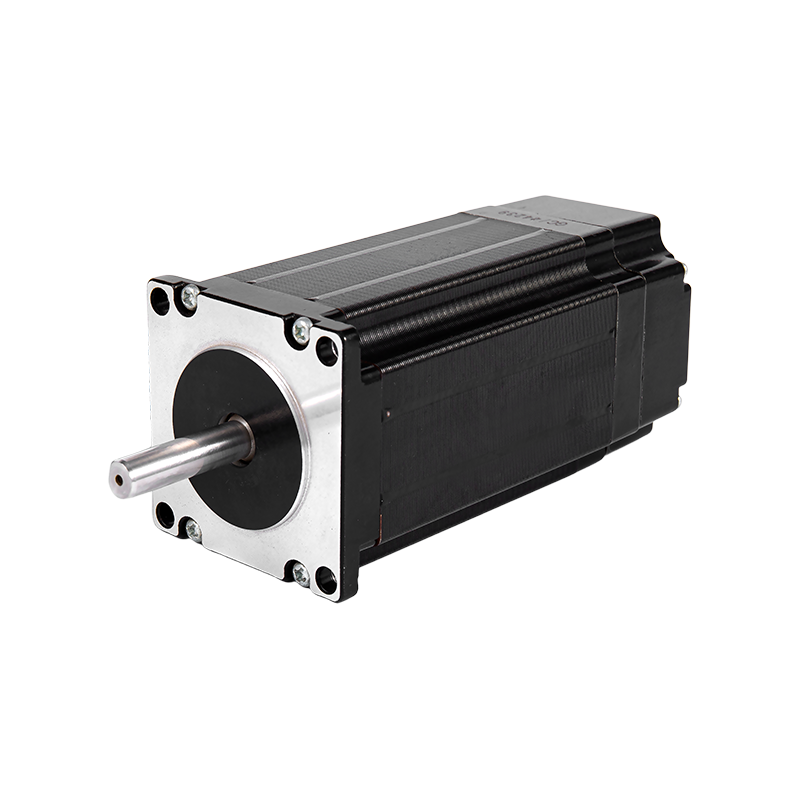
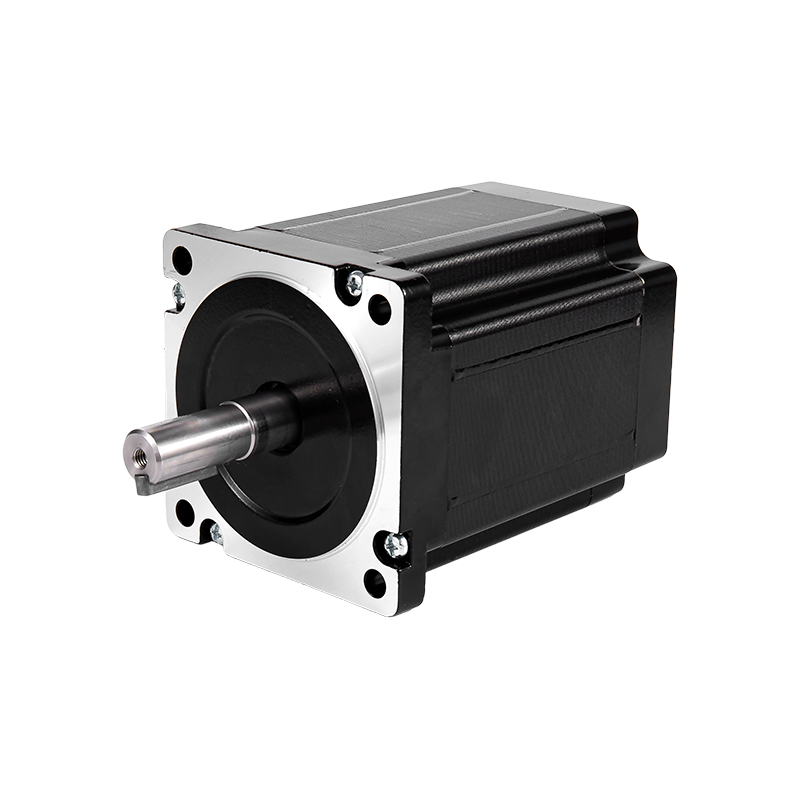
A stepper motor functions by dividing a single full rotation into a series of discrete, equal steps. It moves in response to a sequence of digital pulses sent from a controller and driver. Because it moves in defined increments, it is inherently an open-loop system. It does not typically require an encoder for position verification, as the motor simply executes the number of steps commanded.
Conversely, a servo motor operates within a closed-loop system. It incorporates an encoder or resolver that provides real-time feedback to the controller regarding the motor’s current position, speed, and torque. If an external disturbance causes the motor to deviate from its intended path, the controller detects this discrepancy and adjusts the current to correct the position immediately.
| Feature | Stepper Motor | Servo Motor |
|---|---|---|
| Control System | Typically Open-Loop | Closed-Loop (with Encoder) |
| Feedback | None (unless specified) | Continuous Feedback |
| Cost | Lower | Higher |
| High-Speed Torque | Drops significantly | Maintains consistency |
| Complexity | Simple configuration | Requires tuning |
| Maintenance | Minimal | Moderate |
The most significant divergence between these two technologies lies in their torque-speed curves. Stepper motors are engineered to provide high holding torque at zero speed and high torque at low operating speeds. This makes them exceptionally effective for applications involving frequent start-stop motion or holding a position steady without the risk of slippage. However, as speed increases, the torque produced by a stepper motor drops off rapidly. This is due to the back electromotive force (EMF) and the inductance of the motor windings, which impede the current from reaching the necessary levels at higher frequencies.
Servo motors, by contrast, are designed for dynamic performance. While they may not match the raw low-speed torque density of a comparable-sized stepper motor, they excel at high speeds and can provide consistent torque across a much broader RPM range. Because the servo system continuously monitors the load, it can draw exactly the amount of current required, making it highly efficient in variable-load applications where the machine may encounter sudden resistance or inertia changes.
For applications requiring absolute precision, the choice often comes down to the nature of the positioning error. Stepper motors are highly repeatable. Since they are driven by discrete pulses, they will return to the same position reliably, provided the load does not exceed the motor’s torque capacity. If the load is too high, a stepper motor can lose synchronization, skipping steps and potentially drifting from its intended position without the controller realizing it. This is why stepper motors are perfect for predictable, light-to-moderate loads where the movement profile is known and consistent.
Servo motors are better suited for unpredictable environments. Because they have a feedback mechanism, they can compensate for lost positions in real-time. If a load causes the motor to slip, the servo system immediately recognizes the error and applies additional power to reach the target coordinate. This makes servo systems mandatory for high-speed robotics, complex assembly lines, or any application where a deviation in position would result in a critical mechanical fault or safety hazard.
When selecting between these two technologies, engineers should conduct a thorough analysis of their motion profile.
A stepper motor is the ideal choice when the application involves:
A servo motor is the necessary choice when:
There is no universal “better” option between a stepper motor and a servo motor; there is only the right motor for the specific task at hand. Stepper motors offer an economical, straightforward, and highly effective solution for tasks that prioritize static positioning and predictable, low-to-moderate speed motion. Servo motors provide the performance, intelligence, and adaptability required for complex, high-speed, and high-precision industrial operations. By carefully evaluating the speed, load, and positional requirements of the mechanical system, manufacturers can select a motion control architecture that maximizes productivity while maintaining optimal budgetary efficiency.
1. Introduction: Deconstructing AC Induction Motor Horsepower The AC Induction Motor is one of the m...
READ MORE1. Introduction In modern industrial automation, data center construction, consumer electronics upgr...
READ MOREStepper motors represent a cornerstone of modern motion control, offering precise positioning and re...
READ MOREThe industrial motor landscape is undergoing a significant transformation, driven by the relentless ...
READ MORERelated Products
Building 10, No.199, Jinfeng Road, Suzhou High-tech, Jiangsu Province, China
+86-133 3869 4967
+86-512 6876 9967
sean@retekmotion.com
rsgrivic@126.com
 WhatsApp
Copyright © Jiangsu Retek Motion Co., Ltd. All Rights Reserved. Custom OEM Industrial Multi Rotor Drone Motors Manufacturers